Top 5 Building Mistakes That Ruin Home Comfort
Comfort isn't decided by the air conditioner you choose. It's decided by the building decisions made long before any mechanical system is installed.
Most people assume a comfortable home comes down to choosing the right air conditioner or heater. In reality, comfort is largely determined by decisions made long before any mechanical systems are installed.
Many Australian homes are built to meet minimum compliance requirements, yet still suffer from cold rooms in winter, overheating in summer, condensation on windows, poor air quality and high energy bills.
If you're building a new home, these are five of the most common mistakes that can undermine comfort, efficiency and indoor air quality for decades — and what to do instead.
The five mistakes
1. Building a leaky home
One of the biggest misconceptions in Australian construction is that homes need to be “breathable”.
The key distinction: homes don't need uncontrolled air leaks. People need fresh air. Those are two completely different things — and conflating them is how comfort gets lost.
Every gap around windows, wall penetrations, downlights and construction junctions allows outside air to enter and conditioned air to escape. In winter this creates cold draughts. In summer it lets hot air and humidity flood in.
A leaky building envelope can result in:
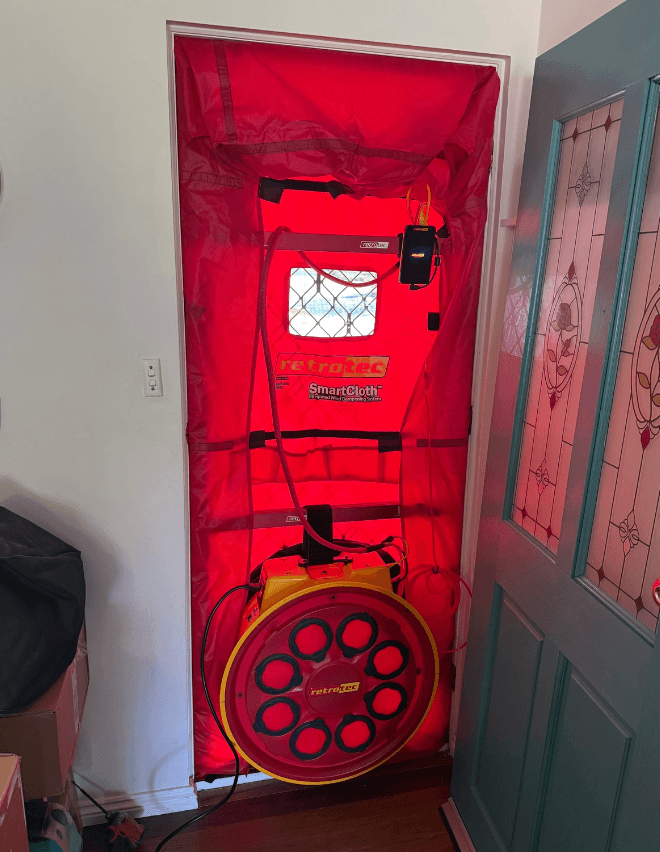
Many homeowners only discover these problems after moving in — once the linings are up and the leaks are hidden inside the walls. A blower door test can measure exactly how airtight a home is and pinpoint where leakage is occurring, ideally while it's still easy and cheap to fix.
See Airtightness Explained for how leakage is measured and what levels to target in South Australian construction.
2. Poorly installed insulation
Insulation only works when it is installed correctly. Even high-performance insulation products can perform poorly if there are gaps, compression, missing sections or poorly detailed junctions.
Common issues include:
Gaps around services and penetrations: Pipes, cables and ducts left un-insulated create direct thermal shortcuts.
Missing insulation behind cabinets: Sections skipped where they can't be seen leave cold spots in the wall.
Compressed ceiling batts: Squashed insulation loses much of its rated R-value.
Incomplete wall insulation: Partial fills leave whole sections of the envelope under-performing.
Thermal bypasses through roof spaces: Air moving around or through insulation carries heat straight past it.
The result is often rooms that are difficult to heat or cool despite having insulation clearly specified on the plans.
The lesson: the quality of installation is often more important than the insulation product itself. R-values on a spec sheet only matter if the insulation is continuous, uncompressed and properly detailed at every junction.
3. Ignoring thermal bridges
Thermal bridges are pathways that allow heat to bypass insulation. They commonly occur through:
Thermal bridging can create cold internal surfaces even when insulation levels appear adequate. Those colder surfaces increase the risk of:
Many homeowners are surprised to discover mould developing in a relatively new home despite having insulation installed. The problem is often thermal bridging rather than a lack of insulation.
Related reading: Mould in New & Airtight Homes and Condensation on New Windows.
4. Choosing windows based on appearance alone
Windows are often the weakest thermal component in the building envelope. Large areas of poorly performing glazing can lead to:
When selecting windows, factors such as frame design, glazing specification, orientation and installation details are just as important as aesthetics.
The good news: a well-designed window system can dramatically improve comfort and energy performance without changing the appearance of the home. Performance and looks are not a trade-off — they're a specification decision.
5. Forgetting about ventilation
As homes become more airtight, ventilation becomes increasingly important. Opening windows can provide fresh air, but it is inconsistent and highly dependent on weather, outdoor noise, security concerns and occupant behaviour.
Without a planned ventilation strategy, homes can experience:
Mechanical Ventilation with Heat Recovery (MVHR) provides a continuous supply of filtered fresh air while recovering heat that would otherwise be lost. This allows airtight homes to maintain both excellent indoor air quality and high energy efficiency.
For more on why air quality affects how you feel day to day, see Poor Sleep & CO₂.
Comfort is a system
Comfort isn't created by a single product. It comes from a combination of elements working together:
When these elements work together, homes become quieter, healthier, more comfortable and more energy efficient. Unfortunately, many Australian homes still miss one or more of these fundamentals.
Understanding these common building mistakes before construction begins is often the difference between a home that simply looks good and one that genuinely performs well for decades.
Keep learning
Blower Door Testing
How airtightness is measured — and why the result matters
Airtightness Explained
What airtightness means and what levels to target
What Is MVHR?
How mechanical ventilation with heat recovery works
Condensation on New Windows
Why new homes get condensation and what fixes it
Mould in New Homes
Why airtight homes develop mould and what actually fixes it
What Is Relative Humidity?
The healthy range and how ventilation controls it
Frequently asked questions
Don't homes need to breathe?
This is one of the most common misconceptions in Australian construction. Homes don't need uncontrolled air leaks — people need fresh air. A building envelope should be airtight, with fresh air delivered deliberately through a planned ventilation strategy. Random gaps around windows, downlights and wall penetrations let in draughts, dust, pollen and humidity while letting conditioned air escape. That isn't healthy breathing; it's wasted energy and poor comfort.
If my home meets building code, won't it be comfortable?
Not necessarily. Many Australian homes are built to meet minimum compliance requirements yet still suffer from cold rooms in winter, overheating in summer, condensation, poor air quality and high energy bills. Compliance is a floor, not a guarantee of comfort. Comfort comes from how well airtightness, insulation, thermal bridging, glazing and ventilation are designed and installed together — details that minimum-standard construction often gets wrong.
Why does my relatively new home have mould?
Mould in a new home is usually a sign of thermal bridging and high indoor humidity rather than a lack of insulation. Thermal bridges — through steel framing, slabs, balcony connections and window installations — create cold internal surfaces where moisture condenses. Combined with airtight construction and no planned ventilation, that moisture has nowhere to go, creating ideal conditions for mould even on plans that specified plenty of insulation.
Is insulation enough to keep a home comfortable?
No. Insulation only works when it is installed correctly and supported by airtightness, reduced thermal bridging, good windows and ventilation. Gaps, compression, missing sections and poorly detailed junctions can dramatically reduce real-world performance, and insulation does nothing to control air leakage or fresh air supply. The quality of installation, and how all the elements work together, matters more than the insulation product specified on the plans.
How do I know if my home is airtight enough?
The only reliable way to know is to measure it. A blower door test pressurises the home and measures exactly how much air leaks through the building envelope, while also identifying where that leakage is occurring. It turns an invisible problem into a number you can act on — ideally before linings go up, when leaks are still easy and cheap to fix.
Planning a high-performance home?
The best time to avoid these mistakes is before construction begins. HiPer Haus can help you get airtightness, insulation, thermal bridging, glazing and ventilation working together — so your home is comfortable, healthy and efficient for decades.
Written by
Jonathen HindryFounder of HiPer Haus. ATTMA Level 1 Airtightness Tester, Certified Passive House Tradesperson and 25+ year plumber — blower door testing, MVHR design and heat pump hot water across Adelaide and South Australia.
