Range Hoods in Airtight Homes
Kitchen ventilation that works with your building envelope — not against it. Design coordination, make-up air systems, and MVHR integration from specialists.
Why standard range hoods don’t work in airtight homes
A ducted range hood extracts a large volume of air from your kitchen and exhausts it outside. In a conventional home, replacement air leaks in through gaps in the building fabric. In an airtight or Passive House home, those gaps don’t exist — and the hood can depressurise the entire building within minutes of being switched on.
The consequences go beyond reduced hood performance. A depressurised building draws replacement air through whatever leakage paths it can find — bypassing your MVHR filters, your thermal envelope, and the carefully sealed penetrations your airtightness contractor installed. In homes with gas appliances, wood heaters or unflued dryers, there is also a risk of backdraught.
Getting kitchen ventilation right in an airtight home requires design coordination that doesn’t happen automatically. It needs to be considered at the right stage, with the right people involved.
400–900 m³/h
Typical range hood extraction rate
More air than most homes can naturally replace in an airtight building
≤0.6 ACH50
Passive House airtightness target
At this level, there are virtually no leakage paths for make-up air
−5 to −10 Pa
Building depressurisation without make-up air
Enough to impair MVHR performance and create backdraft risk
Ducted extraction with make-up air
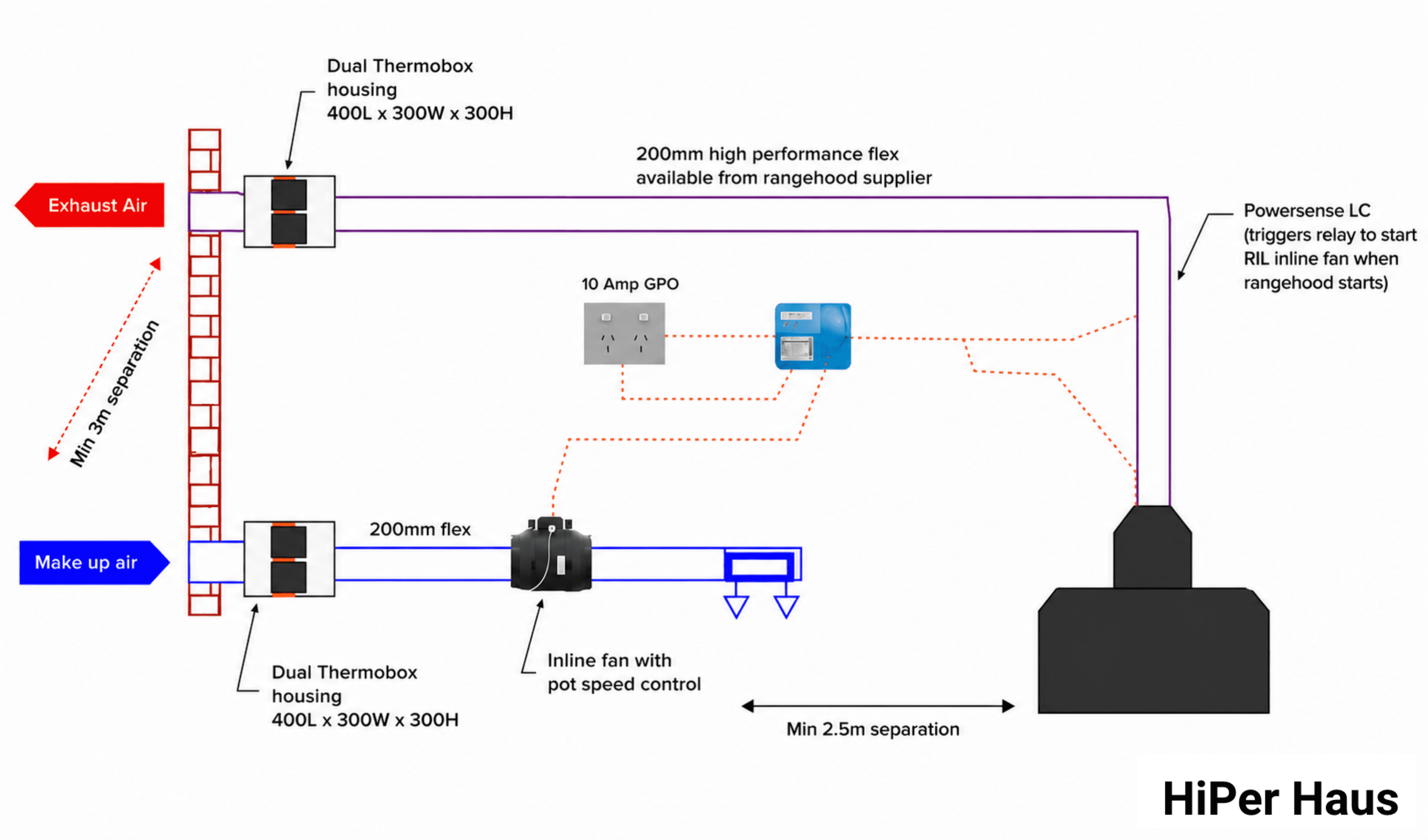
The preferred solution for high-performance homes is a conventional ducted range hood paired with a dedicated make-up air supply. When the hood runs, a small interlocked inline fan draws a controlled volume of fresh air in through a dedicated make-up air inlet — replacing exactly what’s being extracted, keeping the building at neutral pressure.
This approach gives you full extraction performance without compromising your building envelope, your MVHR system, or your airtightness result. The make-up air fan is interlocked with the range hood via a power-sensing relay: when the hood stops, the fan switches off and the sealing insulated shutters reseal both penetrations, returning the building to its normal sealed state.
NCC 2022 and new builds: For new Class 1 homes, kitchen range hoods must discharge to outdoor air — so a recirculating hood is not the right compliance pathway for a new build. And once air is exhausted outside, the home needs a planned make-up air strategy. See the SA NCC 2022 guide →
What this requires — and why it needs early coordination
A dedicated make-up air inlet ducted to outside
Separate from the hood's exhaust and from the MVHR system, giving replacement air a deliberate, controlled path in.
Sealing insulated shutters on both penetrations
Purpose-built sealing shutters such as the Naber Thermobox on both the exhaust outlet and the make-up air inlet — they close airtight when the hood is off, unlike a standard backdraft flap that never fully seals.
An inline fan interlocked to the hood
A small inline fan on the make-up air duct, started automatically by a power-sensing relay whenever the range hood runs — so there's no motorised make-up air damper to fail.
Duct routing resolved at design stage
Duct runs through the roof or wall structure must be planned before framing — not retrofitted.
What about recirculating hoods?
A recirculating range hood filters air through charcoal and returns it to the kitchen — no duct penetration required. This avoids the pressure problem, but doesn’t remove moisture, and is less effective on fine particulates. It may suit a light-cooking retrofit where the MVHR provides good kitchen extraction — but note that for new Class 1 homes, NCC 2022 requires kitchen exhaust to discharge outdoors, so a recirculating hood will not satisfy the code on a new build. For most family homes with regular cooking, ducted extraction with make-up air is the better long-term solution.
What we provide
Kitchen ventilation design as part of a whole-building approach — coordinated with your MVHR system and airtightness strategy.
Kitchen ventilation assessment
We review your kitchen layout, cooktop position, and building envelope to determine the right ventilation approach — ducted extraction, recirculating, or a combination — before any work begins.
Make-up air system design
For ducted range hoods in airtight homes, we design the replacement air path: a dedicated make-up air inlet, sealing insulated shutters, an inline fan interlocked to the hood via a power-sensing relay, and integration with your MVHR system to maintain neutral building pressure.
Range hood selection guidance
We help you select a range hood suited to your cooking habits and building type — extraction capacity, noise level, duct diameter, and compatibility with make-up air controls.
MVHR coordination
The range hood and MVHR systems must coexist correctly. We ensure duct penetrations are separate, sealing shutters are correctly specified, and the MVHR continues to operate normally when the range hood is running.
Sealing shutter specification
Every duct that penetrates the envelope needs a shutter that seals when the hood is off. We specify purpose-built sealing insulated shutters (such as the Naber Thermobox) on both the exhaust outlet and the make-up air inlet — not a standard backdraft flap that never fully seals.
Design-stage coordination
We work with builders and architects at design stage — before structure begins — to resolve kitchen layout, duct routing, penetration locations and airtightness detailing while changes are still easy to make.
Who we work with
Homeowners
Building or renovating a high-performance home and want kitchen ventilation that's been properly thought through — not an afterthought during fitout.
Builders
Working on airtight or Passive House projects where kitchen ventilation needs to be coordinated with the airtightness layer and MVHR system from the start.
Architects & Designers
Need technical input on make-up air design, duct penetration detailing, and range hood specification for a project you're designing.
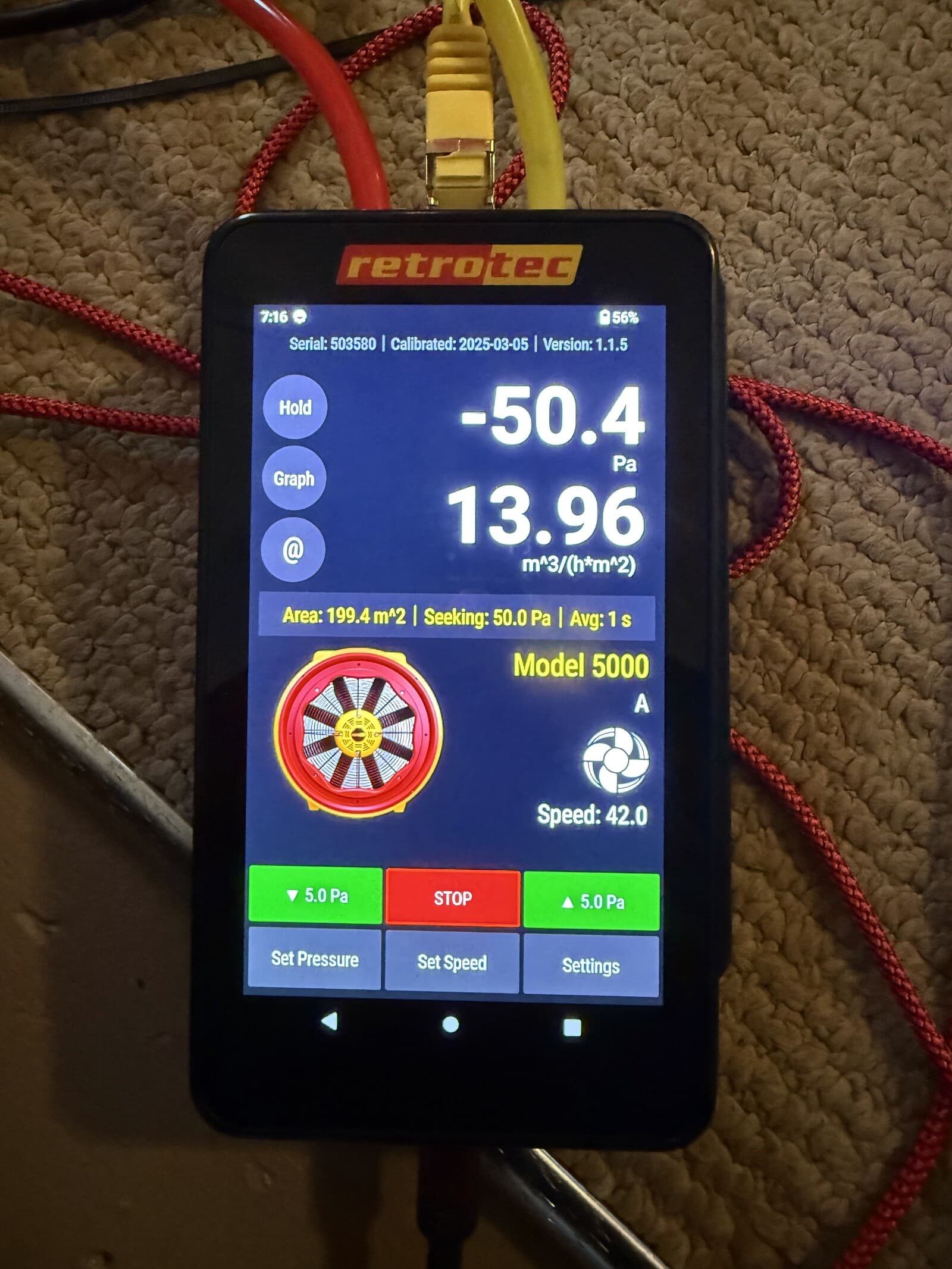
Projects with range hood makeup air
Related services and guides
MVHR Design & Installation
Whole-house mechanical ventilation with heat recovery — the essential partner to an airtight building.
ServiceBlower Door Testing
Verified airtightness measurement — confirming your building envelope performs as designed.
Range Hoods in Airtight Homes — Full Guide
The problem with standard range hoods, make-up air explained, recirculating hood limitations, and MVHR coordination requirements.
Frequently asked questions
Planning a kitchen in an airtight home?
Talk to us early — before duct routes are locked in. We’ll make sure kitchen ventilation is coordinated with your building envelope and MVHR system from the start.