MVHR Design & Installation Adelaide Hills
Heat-recovery ventilation designed for the Hills — cold winters, bushfire-rated construction and condensation control, for new builds, renovations and Passive House projects.
- BAL-aware design
- Zehnder · Aerofresh · Lunos
- Passive House experience
- South Australian specialist
Ventilation built for a colder, wetter climate
The Adelaide Hills sit a world apart, climatically, from the plains just a few kilometres away. Stirling, Aldgate and the townships along the freeway corridor run several degrees cooler year-round, with a genuine four-season climate that includes real winter cold, frost on still mornings and rainfall well above the metropolitan average. That combination — cold, damp and often foggy — is exactly the setting in which planned, heat-recovering ventilation earns its place.
Hills housing stock ranges from heritage stone cottages in the older townships, through 1970s–90s brick-and-tile homes on larger rural-residential blocks, to the newer architect- designed and Passive House projects appearing around Mount Barker and Stirling. Bushfire risk is a defining constraint across much of the region: many Hills properties carry a Bushfire Attack Level rating that shapes what external penetrations, grilles and vents are permitted — a factor that has to be designed around from the very first MVHR concept, not retrofitted once BAL requirements surface.
We’ve supplied and commissioned MVHR on several Hills projects, including a certified Passivhaus Plus display home at Mount Barker built by Enduro Builders — proof that a genuinely airtight, heat-recovery-ventilated home works in this climate, not just in theory.
Why Hills homes benefit from MVHR
Condensation and mould risk is the single biggest reason Hills homeowners come to us. An airtight, well-insulated home in a cold, humid climate will build up moisture on cold surfaces without planned ventilation — MVHR removes that moisture continuously rather than relying on residents to open windows on a freezing morning.
Heat recovery matters more where winters are longer. With a heating season that runs longer and colder than the metro area, the heat recovered from outgoing air — often 85–90% with a well-selected unit — represents a meaningfully larger saving over a Hills winter than the same system delivers on the plains.
Bushfire-rated construction and ventilation aren’t in conflict — but they do need to be designed together. BAL-rated external grilles, ember mesh and penetration sealing all have to be specified correctly from the start so the finished system is both compliant and genuinely airtight.
Filtration matters through summer too. Bushfire smoke haze is a real consideration for Hills residents in fire season — continuous filtered air means the home doesn’t have to be sealed up and stuffy to keep smoke out.
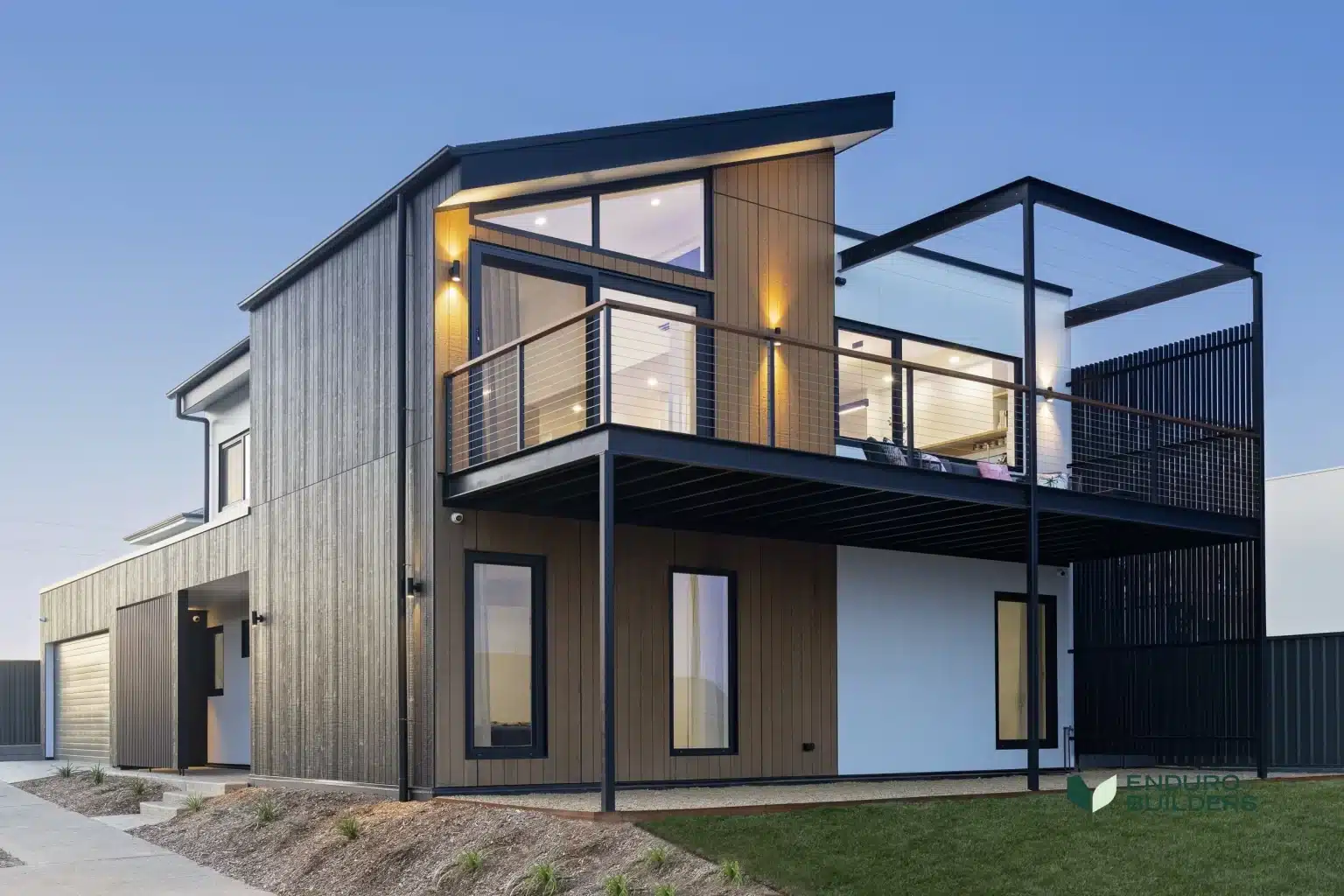
Bushfire Attack Level (BAL) construction shapes MVHR design. External grilles, ember-resistant mesh and penetration details all need to meet the property’s BAL rating — we factor this in from the design consultation, not after the ductwork is drawn.
How MVHR applies across Hills projects
New builds
Newer Hills homes on rural-residential blocks typically have good roof access for a centralised system, designed alongside the BAL construction requirements from the outset.
Heritage stone cottages
Older stone and timber cottages in the historic townships often have minimal ceiling void. A decentralised, through-wall unit delivers heat-recovery ventilation without disturbing original ceilings.
Passive House & high-performance
Certified Passivhaus and Passivhaus Plus projects — including our completed Mount Barker display home — need MVHR designed to Passive House Institute standards from day one.
Renovations & extensions
Upgrading insulation and airtightness in an existing Hills home changes its ventilation needs. We assess whether the improved envelope needs mechanical ventilation added as part of the works.
Bushfire-prone properties
BAL-rated grilles, mesh and duct penetration details are built into the design from the start, so the finished installation is both compliant and properly airtight.
Rural-residential acreage homes
Larger Hills homes on acreage often have more roof space to work with, but longer duct runs and multiple zones need careful design to keep airflow balanced across the whole house.
MVHR services available in the Hills
Design consultation
Review of plans, BAL rating and airtightness targets before any drawings are produced.
BAL-aware ductwork design
External grille and penetration detailing that meets your property's bushfire attack level.
Centralised systems
Zehnder and Aerofresh ducted systems for new builds and larger renovations.
Decentralised systems
Zehnder ComfoSpot and Lunos through-wall units for heritage cottages and retrofits.
Supply & installation
All components supplied and installed during fit-out, coordinated with your builder.
Commissioning
Every terminal measured and balanced, with a full commissioning report issued.
Passive House support
Design and documentation aligned with Passive House Institute requirements.
Servicing & aftercare
Filter replacement schedules and annual servicing for installed systems.
Across the Adelaide Hills
We design and install across the Hills townships and surrounding rural-residential areas. Building elsewhere in South Australia? Our dedicated regional pages cover Adelaide, Barossa Valley, Fleurieu Peninsula, Mount Gambier and Riverland.
Adelaide Hills MVHR — frequently asked questions
Learn more about MVHR and airtightness
MVHR — main service
Products, process and commissioning approach.
What is MVHR?
The full explainer — how heat recovery ventilation works.
Decentralised MVHR
Through-wall systems for heritage cottages and retrofits.
Blower Door Testing — Adelaide Hills
Confirm your envelope is tight enough for MVHR to perform as designed.
What is Passive House?
The standard behind our Mount Barker Passivhaus Plus project.
Condensation on new windows
Why cold-climate homes need planned ventilation to control moisture.
MVHR design & installation in other South Australian regions
We design and install MVHR right across the state. If your project sits outside this region, these guides cover the local climate, housing styles and design considerations in each area.
Adelaide
Metro new builds, renovations and volume-builder estates.
View Adelaide →Barossa Valley
Stone homes, high thermal mass and hot, dry summers.
View Barossa Valley →Fleurieu Peninsula
Coastal salt air, holiday homes and intermittent occupancy.
View Fleurieu Peninsula →Mount Gambier
Limestone homes, decentralised retrofits and a cooler, wetter climate.
View Mount Gambier →Riverland
Extreme summer heat, dust and evaporative-cooling legacy.
View Riverland →Talk to HiPer Haus about MVHR in the Adelaide Hills
Tell us about your Hills build, renovation or Passive House project — including any BAL rating — and we’ll confirm system options, design approach and pricing.