Preparing for a Blower Door Test
The definitive Australian checklist for builders and homeowners — what to do, what to leave alone, and what trips people up.
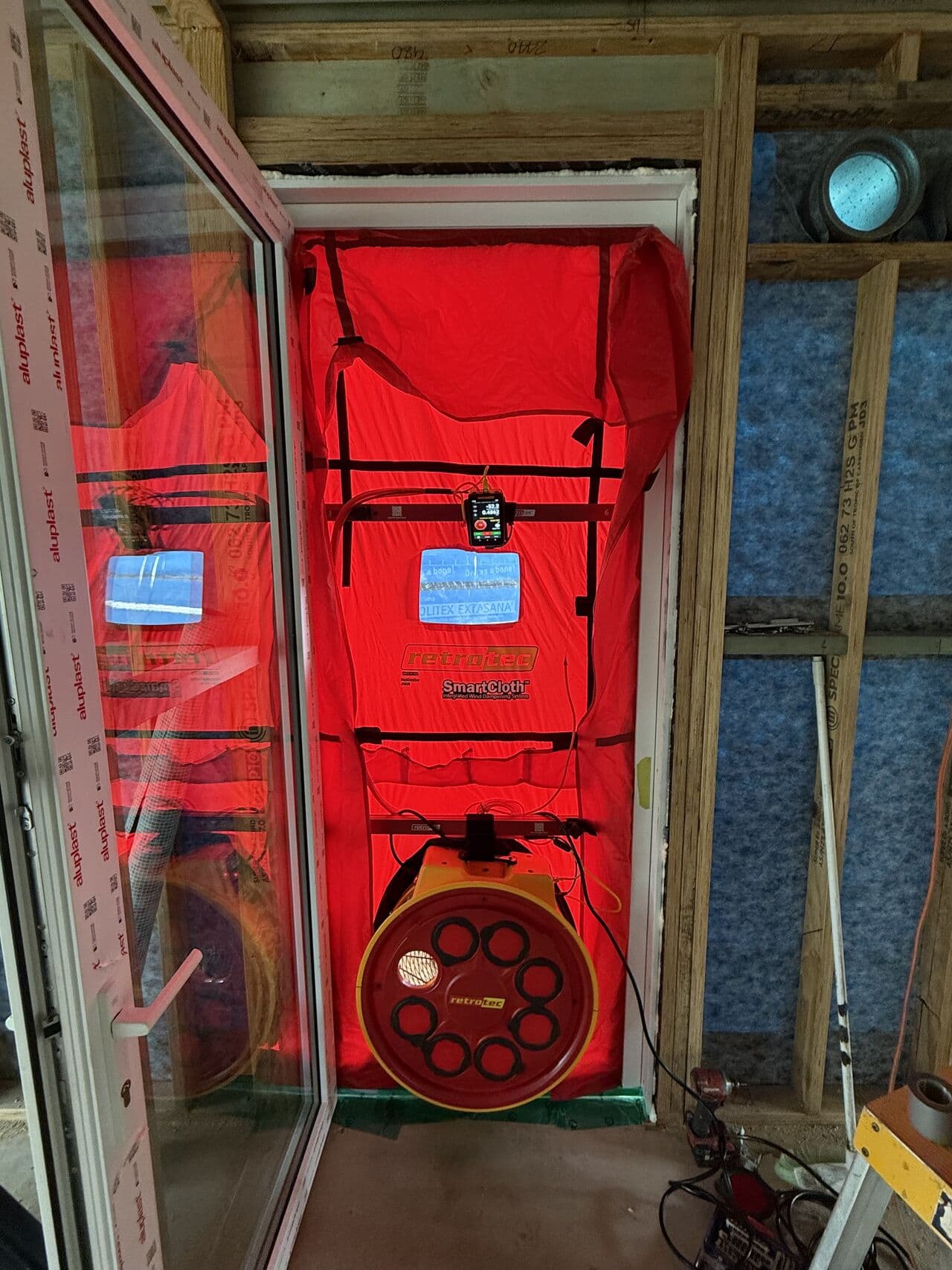
A blower door test is only as accurate as the preparation behind it. Get the setup wrong and you can end up with a result that’s misleadingly good (masking real leaks) or misleadingly bad (flagging “leaks” that are really just an open window or a running exhaust fan). This guide walks through exactly what needs to happen before, during and immediately after a test.
By Jonathen Hindry · Published 2 July 2026 · Updated 11 September 2026 · 15 min read
Key takeaways
- Test preparation has two very different goals: a certification/compliance test needs a very specific, standardised building state; a diagnostic test is more flexible and focused on finding leaks.
- The guiding principle is to test the home in its normal operational state.
- Builders and homeowners have different responsibilities in preparation — this guide covers both.
- Testing mid-construction needs different preparation from a final, completed-home test.
- A short day-before and morning-of checklist covers almost everything that trips people up.
Jump to a section
1. Builder checklist
For builders coordinating a test — particularly a pre-lining test mid-construction — preparation is mostly about site access and sequencing:
- Confirm the airtight layer is substantially complete before booking a pre-lining test — testing too early wastes the visit.
- Ensure clear access to the test doorway — no scaffolding, materials, or skip bins blocking it.
- Make sure power is available on site for the blower door controller and laptop.
- Brief on-site trades that a test is happening, so no equipment runs nearby and no doors are propped open mid-test.
- Have a copy of the airtightness target ready to share with the tester.
- If this is a retest, have a summary of what sealing work was done since the previous test.
Booking a test for your site?
Get an instant quote →2. Homeowner checklist
For a completed or near-completed home, preparation is mostly about normal household items that need to be temporarily adjusted:
- Close and latch all windows and external doors.
- Close or leave open interior doors, according to your tester's instructions.
- Turn off exhaust fans and range hoods, leaving them as installed — do not tape or temporarily seal them.
- Leave permanent vents in their normal operational state — open or closed according to their installed design.
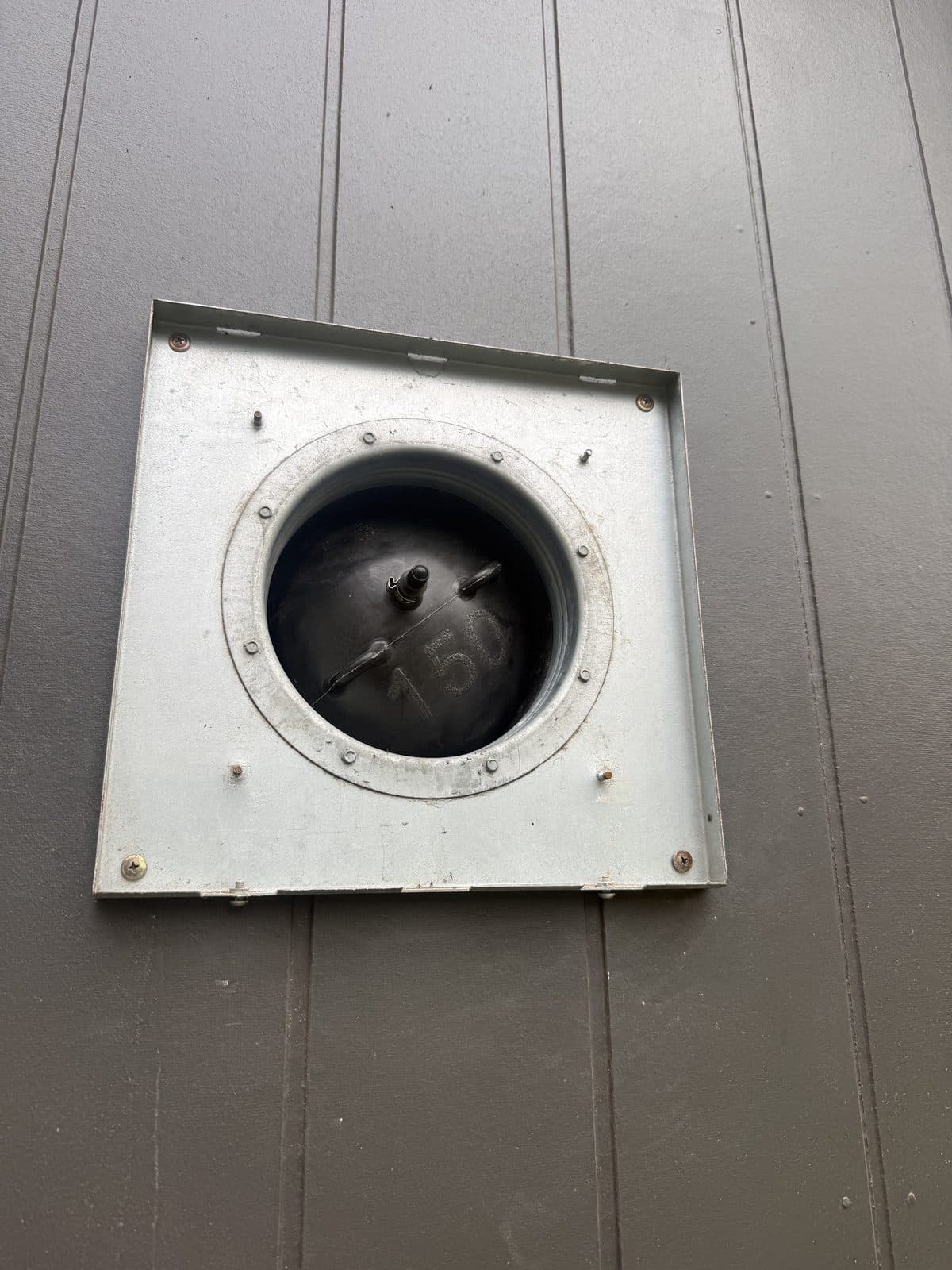
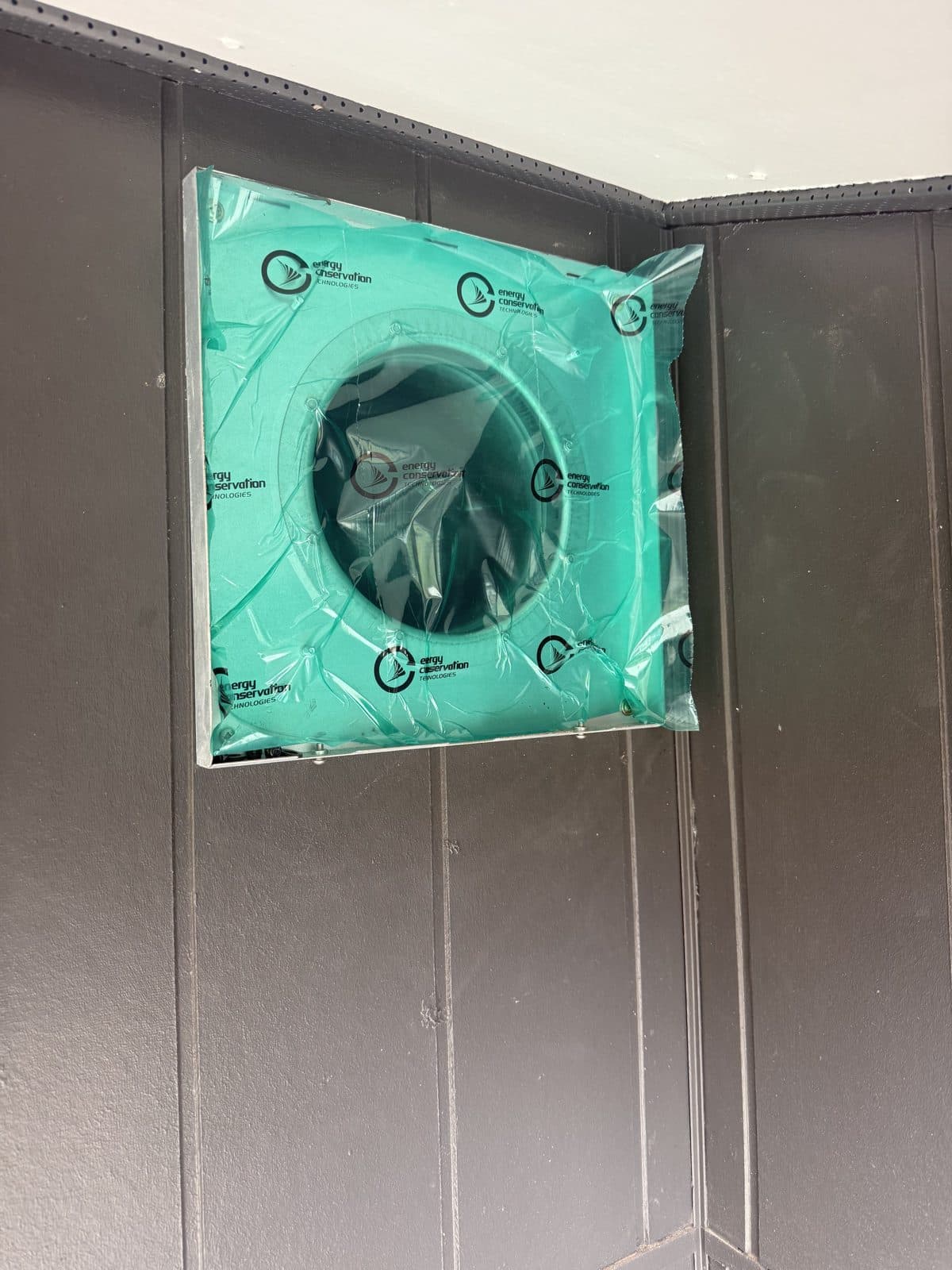
- Turn off the MVHR system; only its external intake and exhaust vents are temporarily sealed for the test.
- Close dampers on any open fireplace, wood heater, or evaporative cooling system.
- Turn off ducted heating, cooling and evaporative systems for the duration of the test.
- Arrange for pets to be secured in a single room or removed from the home during testing.
- Let the tester know about any unusual features — a wood heater flue, an old chimney, a whole-house fan.
For an MVHR system, only the external intake and exhaust vents are temporarily sealed for the test, and the unit is switched off. Exhaust fans, range hoods and other permanent vents are not taped or sealed; they remain as installed and are tested in their normal operational state. A vent without a damper therefore remains open. The MVHR external vents can be sealed with an inflatable bung or with duct seal tape moulded over the opening:
3. The day before
Check the weather forecast
Very high winds can affect test accuracy; a tester may reschedule in genuinely severe conditions, though moderate Adelaide breezes are rarely an issue.
Confirm access
Make sure someone will be available to let the tester in, and that the test doorway is accessible.
Finish last-minute sealing
If this is a retest, sealants and tapes generally need time to cure before testing.
Clear the test doorway
Remove furniture, doormats, or anything that would interfere with fitting the blower door frame.
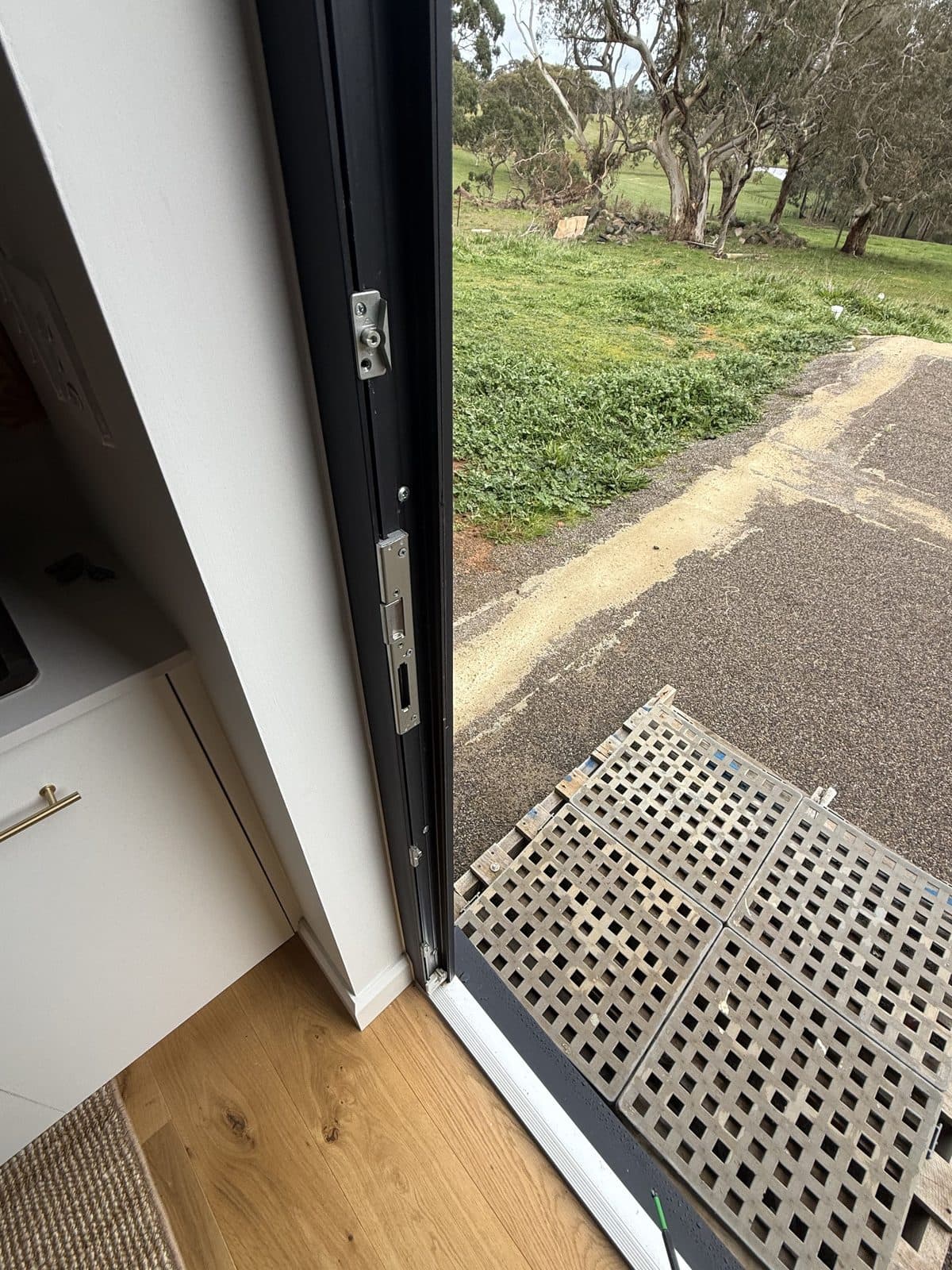
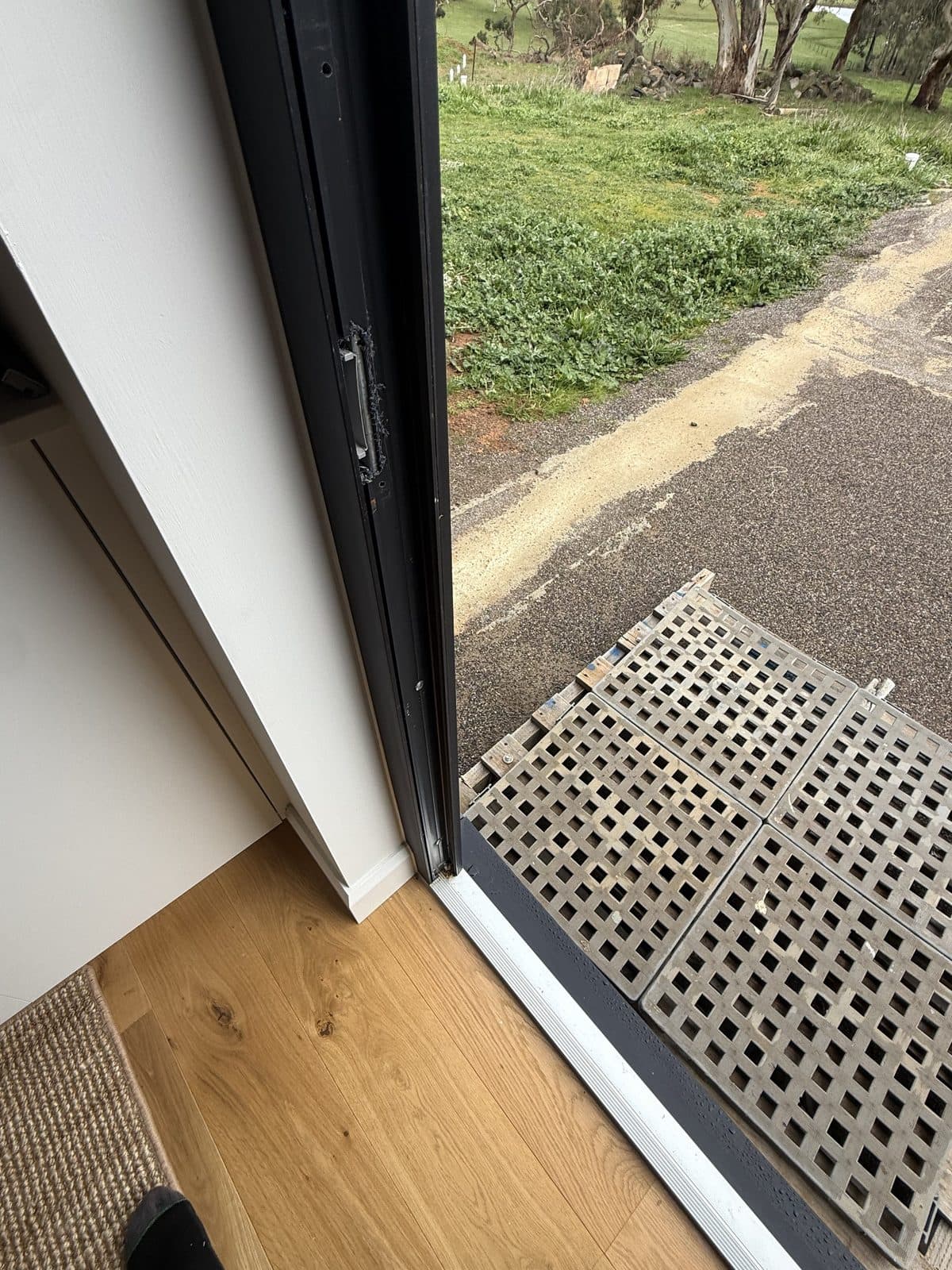
On some doors, the tester will need to temporarily remove hardware such as the strike plate or latch mechanism so the blower door frame can seal fully against the doorway — it’s refitted once testing is complete:
4. The morning of the test
Walk through the checklist above one more time. If cooking, showering or running appliances that generate steam or fumes, try to finish well before the tester arrives — residual steam can occasionally interfere with smoke-pencil leak detection. Make sure the tester has clear parking and access.
5. During testing
Avoid opening and closing external doors or windows while the fan is running — this directly disrupts the pressure the test is trying to hold. If you’re on site, this is a good opportunity to walk through with the tester during the leak-hunting phase and see leaks located in real time.
Expect the test to take somewhere in the order of one to a few hours depending on building size and how much leak-hunting is being done.
6. What not to do
Windows: Leaving any window unlatched or slightly open
Even a small gap can dominate the result and mask genuine envelope leaks
Doors: Propping an external door open for deliveries or ventilation during testing
Directly changes the pressure differential the test is measuring
Exhaust fans: Leaving bathroom or kitchen exhaust fans running
Direct openings to outside that will register as major leaks
Fireplaces: Leaving a damper open, or a fire lit
A lit fire during a depressurisation test is also a safety hazard
Rangehoods: Leaving a ducted rangehood running or its damper open
Same issue as exhaust fans — a direct path to outside
Air conditioners: Leaving split systems or evaporative cooling running
Evaporative systems have large, direct openings to outside air
Heating systems: Leaving ducted gas or electric heating running
Can affect pressure readings and, for combustion appliances, safety
Pets: Letting pets roam freely near the test doorway
Risk of doors being opened mid-test or pets being startled
7. Printable checklist
Before the tester arrives
- All windows closed and latched
- All external doors closed and latched
- Interior doors set as instructed by your tester (usually open)
- Bathroom exhaust fans off and left as installed — not taped or sealed
- Rangehood off and left as installed — not taped or sealed
- Permanent vents left in their normal operational state — open or closed according to their design
- MVHR off, with only its external intake and exhaust vents temporarily sealed
- Dryer vent checked with tester if ducted externally
- Fireplace/wood heater damper closed, fire out well in advance
- Ducted heating and cooling off
- Evaporative cooling off, damper closed
- Split system air conditioners off
- Pets secured away from the test area
- Test doorway clear of furniture, mats, obstructions
- Site access confirmed (parking, entry, power if required)
- Unusual features (old chimney, whole-house fan, ducted vacuum) flagged to your tester in advance
During the test
- No doors or windows opened
- Minimise movement in and out of the building
- No cooking, showering, or appliance use generating fumes/steam
- Note any questions to ask the tester during leak-hunting
Feel free to save, print or screenshot this checklist ahead of your test.
Frequently asked questions
Do I need to be home during the test?
Someone needs to provide access, but you don't need to be present the entire time, though being there for leak-hunting is useful.
Should windows be open or closed during a blower door test?
Closed and latched, in their normal closed operating position, unless your tester specifically instructs otherwise.
Do I need to turn off my air conditioner?
Yes, ducted and split systems should generally be off, and evaporative cooling dampers closed, before testing.
What happens to my pets during the test?
Secure them in a single closed-off area or remove them from the property during testing.
Can I still cook or shower before the test?
Yes, but finish well beforehand and ventilate normally, as residual steam can interfere with smoke-pencil leak detection.
How long does preparation take?
For a straightforward home, working through the checklist typically takes 10-15 minutes.
What if I forget to close something?
An experienced tester will usually notice, but it's best not to rely on this as an overlooked item can skew your result.
Does weather affect the test?
Moderate wind is generally fine; very high winds can add unpredictable pressure variation and may lead to rescheduling.
What's different about preparing for a pre-lining test?
Preparation is more about site access and sequencing rather than household items like exhaust fans and pets.
Do I need to remove furniture or belongings?
No, only the test doorway itself needs to be kept clear for the blower door frame.
Will the test damage my home?
No, the pressures used are moderate and well within normal building tolerances.
How long does the whole visit take?
Typically one to a few hours depending on building size and how much leak-hunting is included.
Related articles
Booking a blower door test in Adelaide or South Australia?
Get an instant quote from HiPer Haus, and save or print the checklist above so you’re fully prepared on the day.
Written by
Jonathen HindryFounder of HiPer Haus. ATTMA Level 1 Airtightness Tester, Certified Passive House Tradesperson and 25+ year plumber — blower door testing, MVHR design and heat pump hot water across Adelaide and South Australia.
