Common Air Leaks Found During Blower Door Testing
You don't need to understand ACH50 to ask the question that actually matters: where is my house leaking air? Here are the nine places we find it most, with real photos from South Australian tests.
Every blower door test has two outputs. The first is a number — the ACH50 or air permeability result. The second, and often more useful one, is a map: a specific, physical list of where air is moving through the building envelope. Under depressurisation, a smoke pencil or your hand held near a suspect junction will usually tell you immediately whether it’s a leak.
The locations below turn up again and again across new builds, renovations and existing-home testing in South Australia — regardless of the age or style of the house. This page uses real photos from our own testing, not stock images, because what a leak actually looks like on site is more useful than a generic illustration.
By Jonathen Hindry · Published 4 July 2026 · Updated 11 September 2026 · 11 min read
Key takeaways
- Most homes leak from a predictable shortlist of locations, not one big hole — sliding doors, exhaust fans, ceiling penetrations, junctions and service entries account for the large majority of measured leakage.
- A component can look and feel fine — a door that locks firmly, a fan with a damper fitted — and still be a significant leakage path under depressurisation.
- Older extensions and lean-tos are frequently the single biggest contributor in a renovated home, because they were rarely built with a continuous airtightness layer in the first place.
- Nearly everything on this list is fixable — the cost depends heavily on whether it's found before or after linings are finished.
- Thermal imaging alongside the test also picks up missing or displaced ceiling insulation — not air leakage itself, but a related heat-loss problem that shows up in the same visit.
Jump to a location
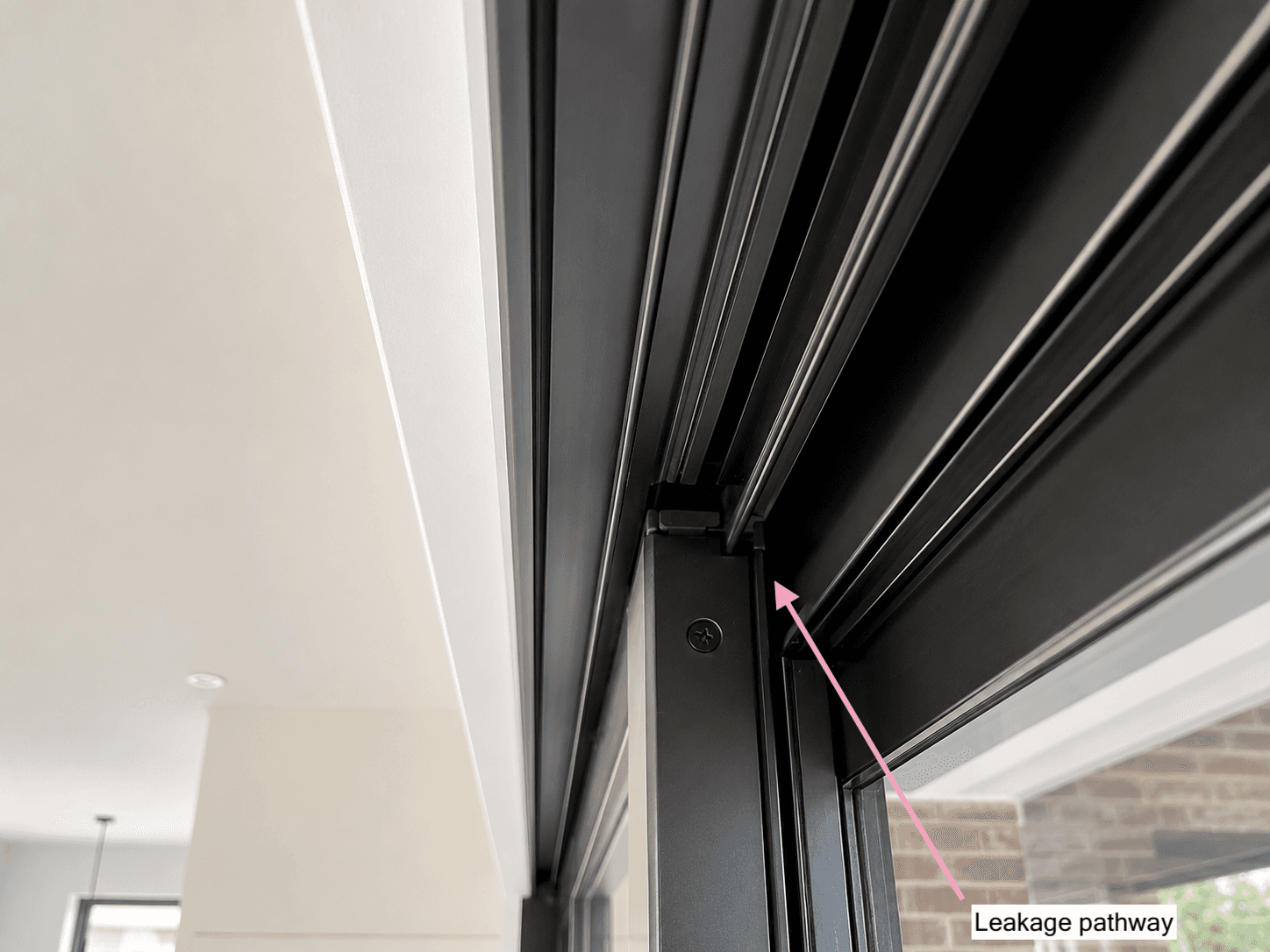
1. Sliding door heads and tracks
A sliding door’s weatherseal is built to manage bulk water and draughts, not to meet an airtightness standard. The running track and the head of the frame are usually a mechanical fit rather than a sealed joint — so a door can close firmly, lock properly, and still be one of the largest single leakage paths in the house once the fan is running.
2. Bathroom and laundry exhaust fans
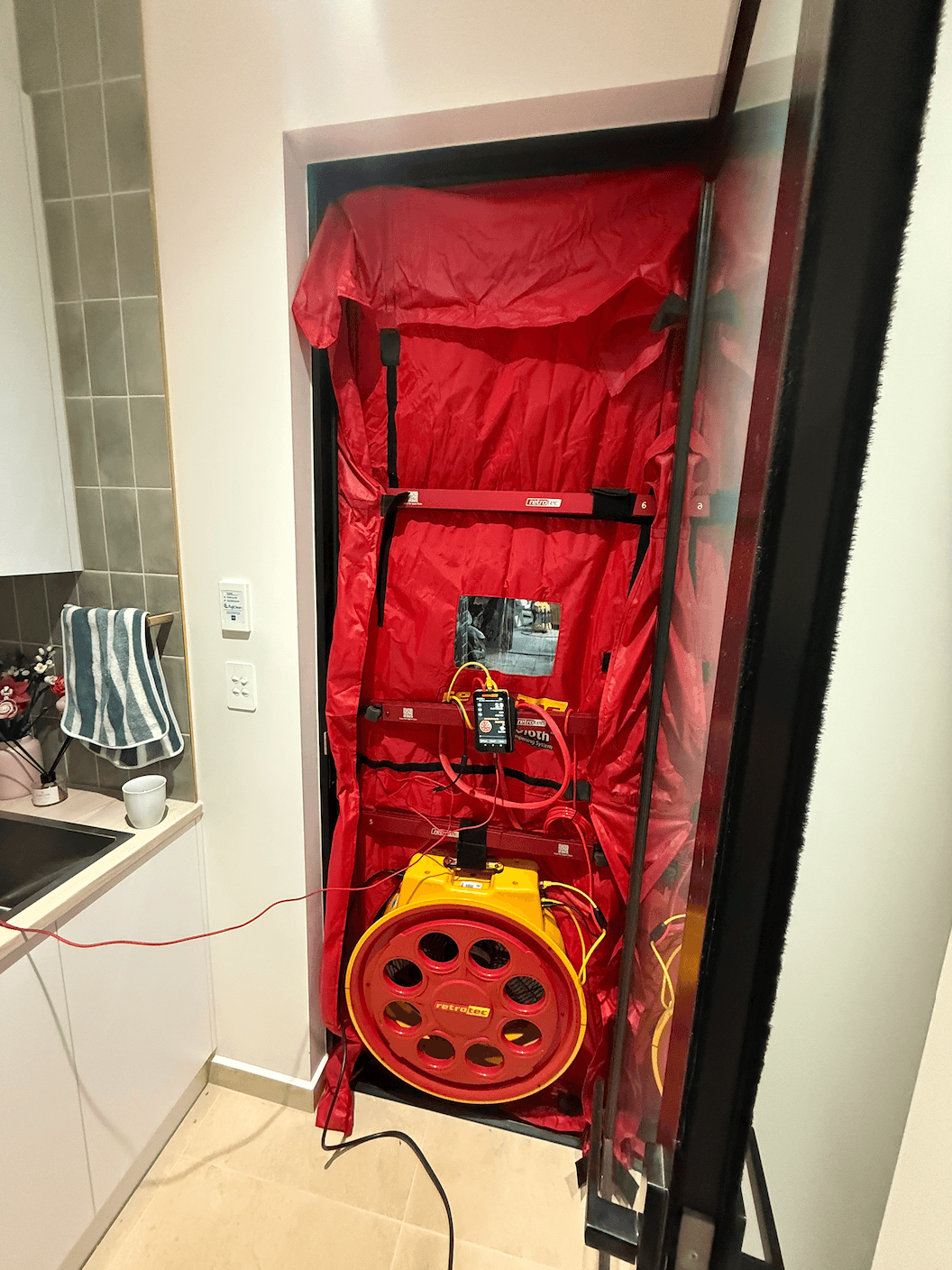
A backdraught damper reduces airflow through the fan when it’s switched off, but it’s rarely the whole fix on its own. The duct penetration through the ceiling or wall, and the gap around the fan housing itself, are separate details that both need sealing.
At Willunga, the owner had already fitted dampers to the bathroom and laundry exhaust fans before testing. The fan penetrations were still a measurable leakage path — a reminder that a damper alone doesn’t make a fan penetration airtight.
See Damp Bathrooms That Never Dry for how an underperforming exhaust fan affects moisture, not just airtightness.
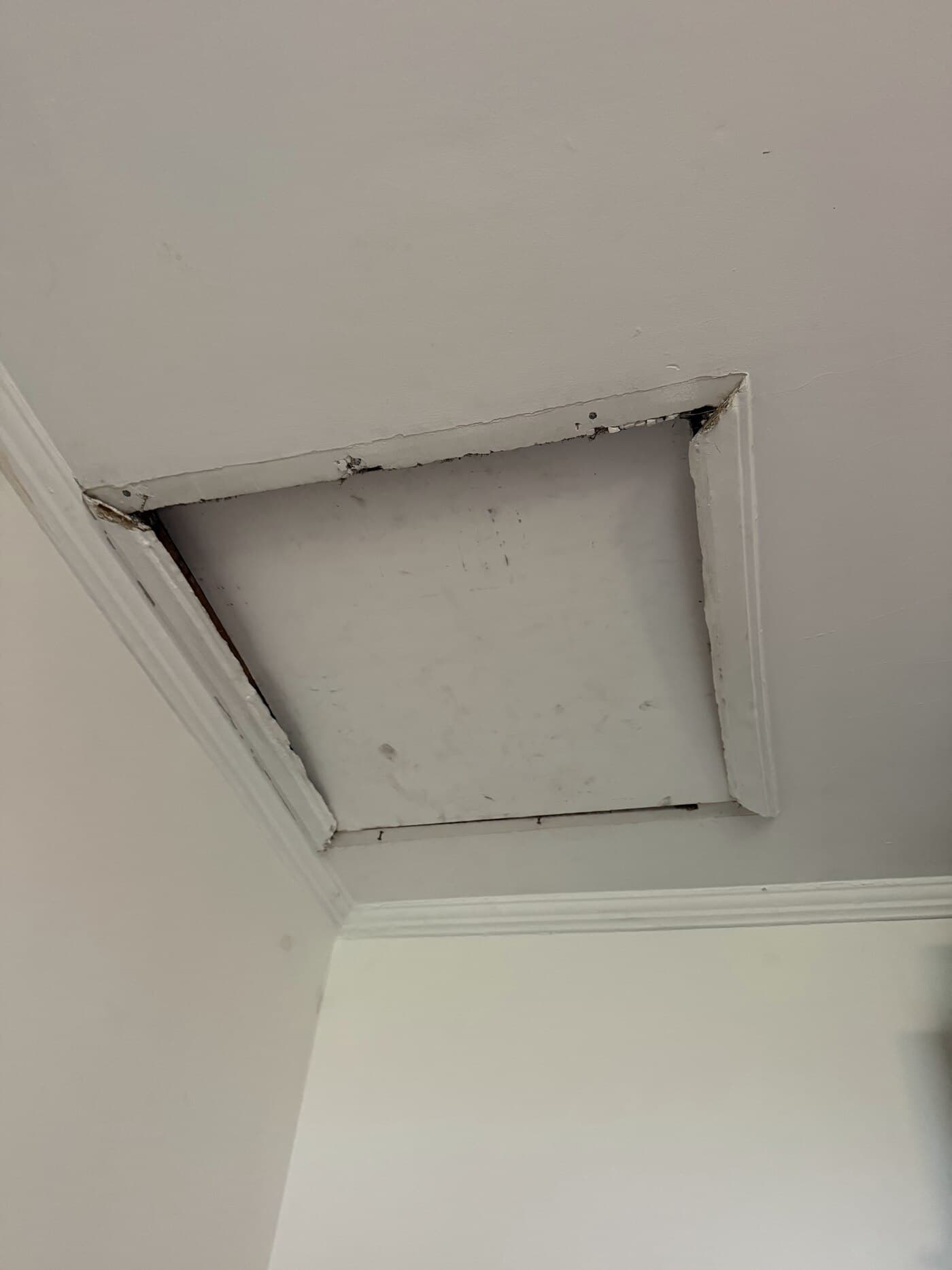
3. Ceiling access hatches
A roof access hatch is very often just a lid resting in an opening, with no gasket sealing it to the frame. It looks closed. Under depressurisation, air moves straight past the unsealed edge into the roof space — an easy detail to miss because it doesn’t look broken or unfinished.
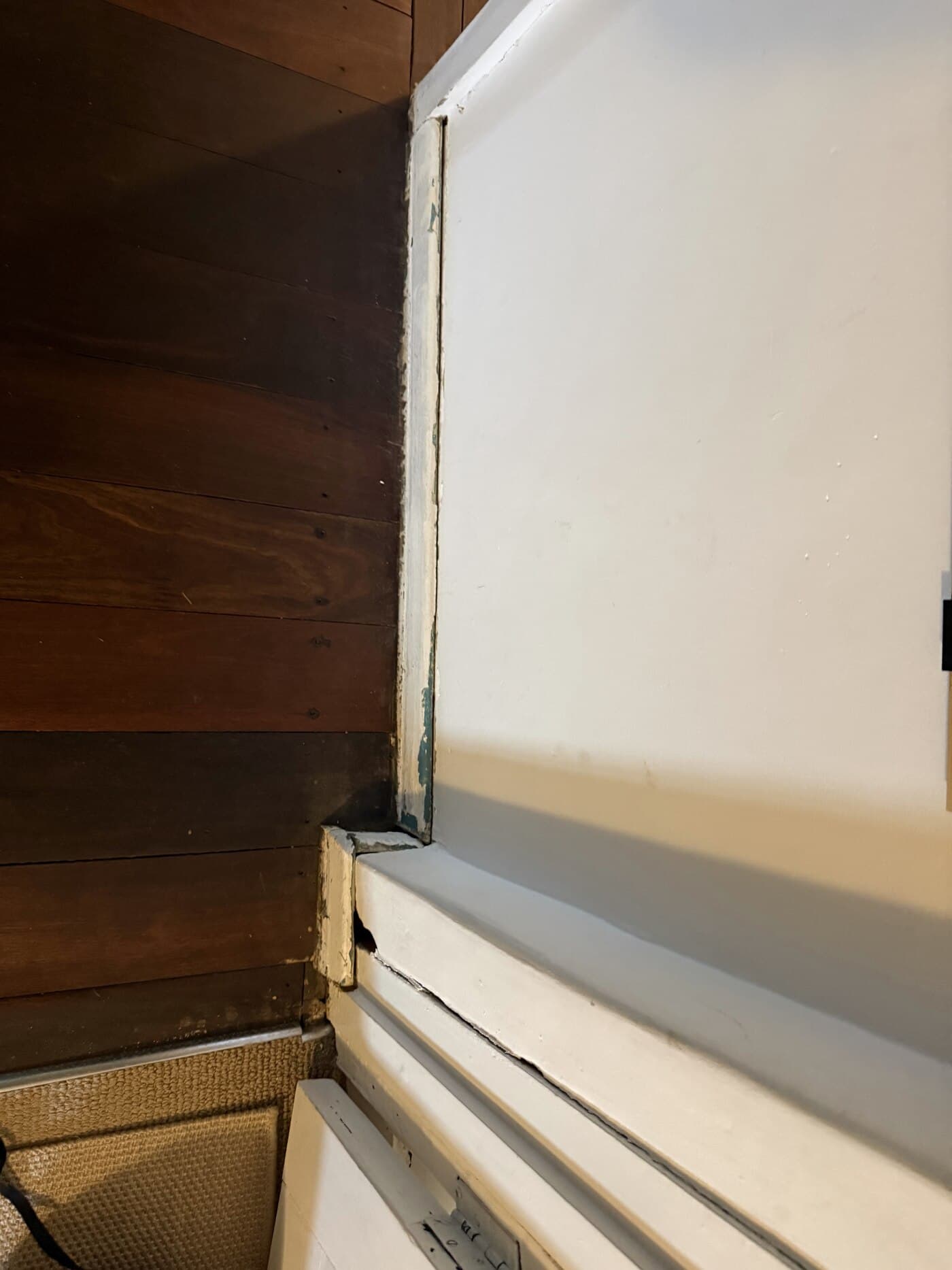
4. Skirtings, floorboards and junctions
Anywhere plasterboard meets structure — at the ceiling, at the floor, or at a change in wall material — is a potential gap if the airtightness layer wasn’t continuous before the trim went on. Cornices and skirtings hide these junctions from view, which is exactly why they’re so often left unsealed: nobody sees the gap once the trim is fitted.
Timber floorboards add their own version of the same problem — gaps between boards, and at the perimeter where flooring meets skirting, both sit directly on the airtightness layer in suspended-floor construction. See bottom plates for the construction-stage fix.
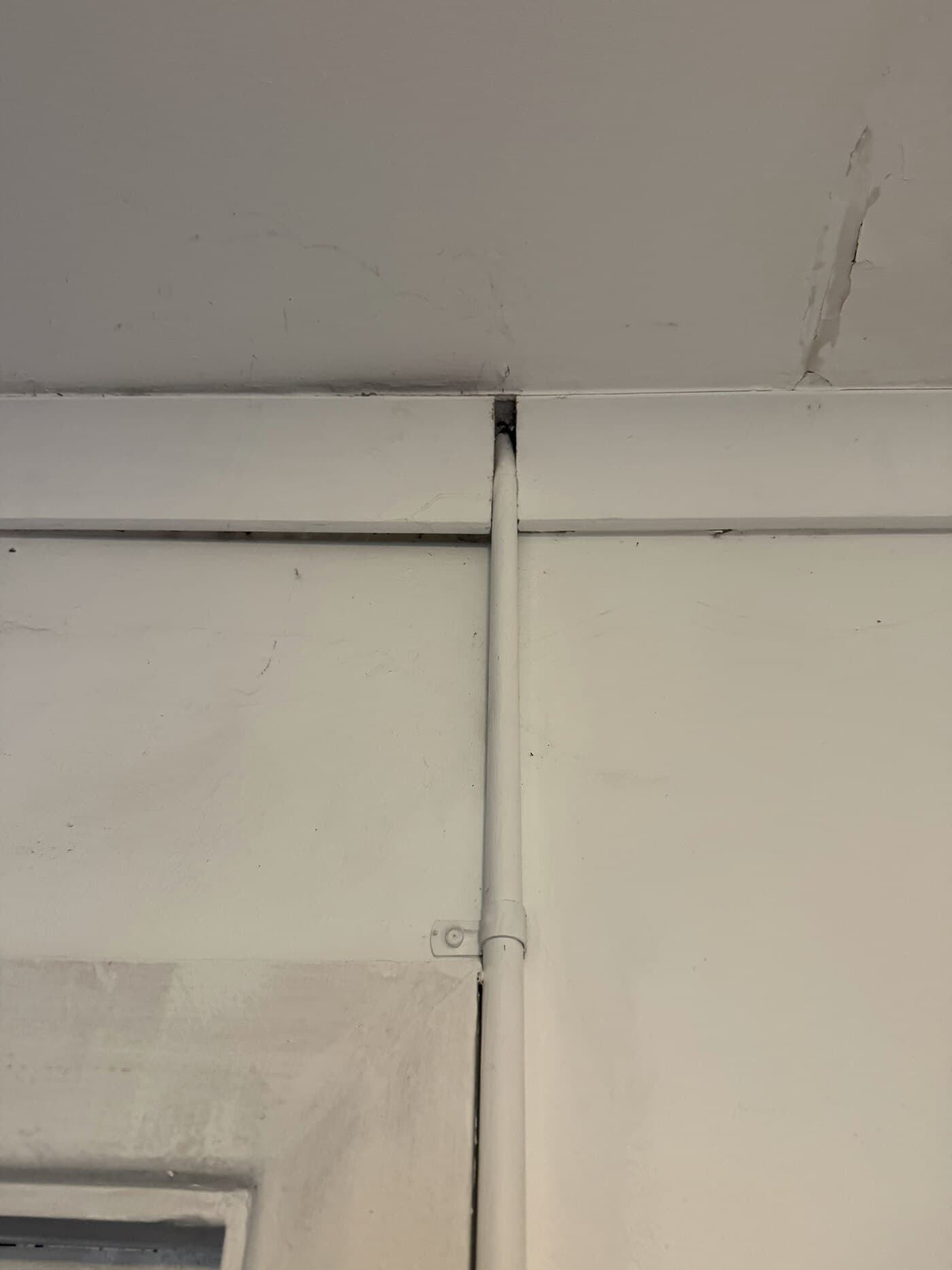
5. Service penetrations
Every pipe and cable that crosses the building envelope leaves a hole that needs to be deliberately closed, not just filled around. A service penetration at a junction is a particularly common combination — one gap, two leakage mechanisms.
See service penetrations in our construction-stage guide for how these are sealed properly with grommets before linings go on.
6. Rangehood duct penetrations
The rangehood duct is one of the largest single penetrations in a typical home — a 150 mm or larger opening straight through the envelope, usually with only a basic backdraught damper doing part of the sealing job. Evaporative cooling ducts are a close relative of the same problem: a large, uninsulated duct straight to outside air, often with a poorly fitted damper.
See Range Hoods in Airtight Homes for makeup air and NCC 2022 implications, and rangehood duct in our construction guide for the sealing detail itself.
7. Recessed lights and ceiling penetrations
Downlights are a direct penetration into the roof space, and standard fittings are rarely gasketed to the ceiling lining. One downlight is negligible; a house with thirty or forty of them adds up to a meaningful chunk of total leakage, right alongside solar conduits, PV cables and split-system refrigerant pipes crossing the same ceiling plane.
See roof penetrations for what to specify instead — IC-rated, gasketed downlights or airtight cover boxes.
8. Older lean-tos and extension junctions
Older lean-tos and additions were frequently built to a lower standard than the primary residence, without a continuous airtightness layer at all — and the junction where the old structure meets the new is rarely detailed as an air barrier, even when the new section is built well.
HiPer Haus field note
On this Thebarton renovation, we tested two configurations: including the existing lean-to, and with it excluded. The result dropped from 19.78 to around 12.2 m³/(h·m²) at 50 Pa once the lean-to was taken out of the calculation — the lean-to alone accounted for a large share of the home’s total leakage. See the full result.
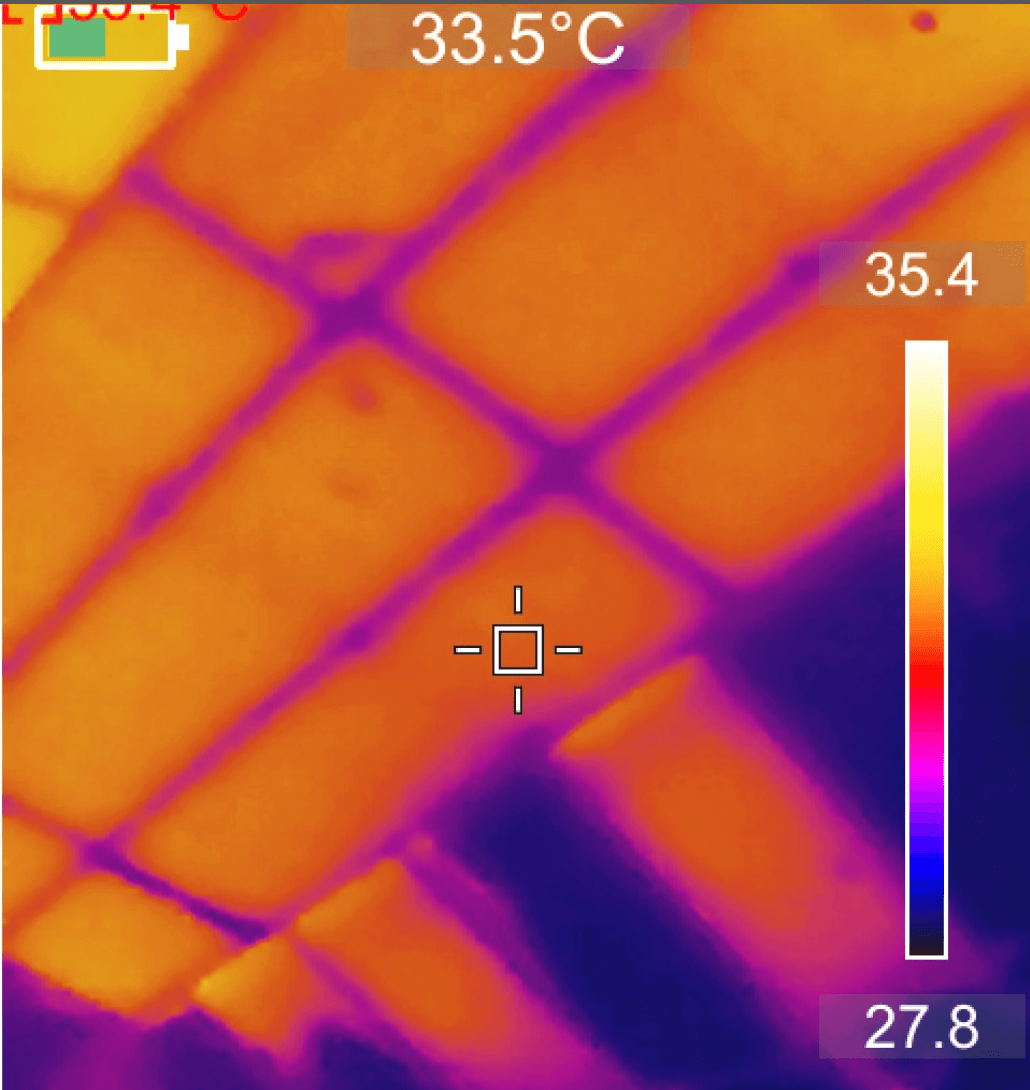
9. Missing ceiling insulation (thermal imaging)
Not every problem a blower door visit turns up is air leakage. Where conditions allow, we pair the test with thermal imaging — a cool morning with a stable indoor-outdoor temperature difference shows up missing, displaced or compressed ceiling insulation as a warm patch against the surrounding cooler ceiling. It doesn’t change the ACH50 number, but it’s the same visit, the same access, and a genuinely useful second finding for very little extra time on site.
What this means for your test
None of the locations above are unusual or a sign of poor workmanship on their own — they’re simply the places air moves most easily through an otherwise finished-looking building. What separates a leaky result from a tight one isn’t whether these details exist; it’s whether each one was deliberately sealed.
A blower door test turns that question from a guess into a measurement — and, with a smoke pencil under depressurisation, into a physical, photographable list you can actually act on.
Want to know where your home is leaking?
A blower door test with smoke tracing shows you exactly where air is moving — before or after construction — with a documented, photographed result.
Keep learning
Can You Fail a Blower Door Test?
How targets are set and what happens if you miss one
10 Air Sealing Details Easy During Construction
The construction-stage fix for most of the leaks on this page
Preparing for a Blower Door Test
What to do and leave alone before your test
Blower Door Hole Size Calculator
Turn your ACH50 result into a hole you can picture
What Is ACH50?
What the headline number actually means
Project Case Studies
Real, documented blower door results across South Australia
Frequently asked questions
What is the most common place blower door testing finds air leakage?
There's no single universal answer — it depends on the age and construction of the home — but a handful of locations turn up again and again across South Australian testing: sliding door heads and tracks, bathroom and laundry exhaust fans, ceiling access hatches, skirting and cornice junctions, service penetrations, rangehood ducts, recessed lighting, and the junctions where older extensions or lean-tos meet the main structure.
Why do sliding doors leak air even when they close and lock firmly?
A sliding door's weatherseal is designed to manage bulk water and draughts, not to meet an airtightness standard — the running track and the head of the frame in particular are usually just a mechanical fit, not a sealed joint. A door can close firmly, lock properly and still be one of the largest single leakage paths in the house under blower door depressurisation.
Do bathroom and laundry exhaust fans need dampers to stop air leakage?
A damper helps, but it's rarely the whole fix on its own. Backdraught dampers reduce airflow through the fan when it's off, but the duct penetration through the ceiling or wall, and the gap around the fan housing itself, both need to be sealed too. We've tested homes where dampers had already been fitted and the fan penetration was still a measurable leakage path.
Can leaks found during a blower door test always be fixed?
Almost always, yes — the question is cost and disruption, not whether it's possible. Leaks found before plasterboard goes up are inexpensive to seal because everything is still exposed. Leaks found in a completed home usually still have a practical fix (better seals, gaskets, tape, or a purpose-made damper) but may involve more access work.
Are older extensions and lean-tos always leakier than the rest of the house?
Often, yes. Older lean-tos and additions were frequently built to a lower standard than a primary residence, without a continuous airtightness layer at all, and the junction where they meet the main structure is rarely detailed as an air barrier. On one Thebarton renovation we tested, excluding the existing lean-to from the calculation dropped the result from 19.78 to around 12.2 m³/(h·m²) at 50 Pa — the lean-to alone accounted for a large share of the home's total leakage.
Written by
Jonathen HindryFounder of HiPer Haus. ATTMA Level 1 Airtightness Tester, Certified Passive House Tradesperson and 25+ year plumber — blower door testing, MVHR design and heat pump hot water across Adelaide and South Australia.
