MVHR Retrofit — Nairne, Adelaide Hills
This is our own home, running as a live test bench for the services we build for clients.
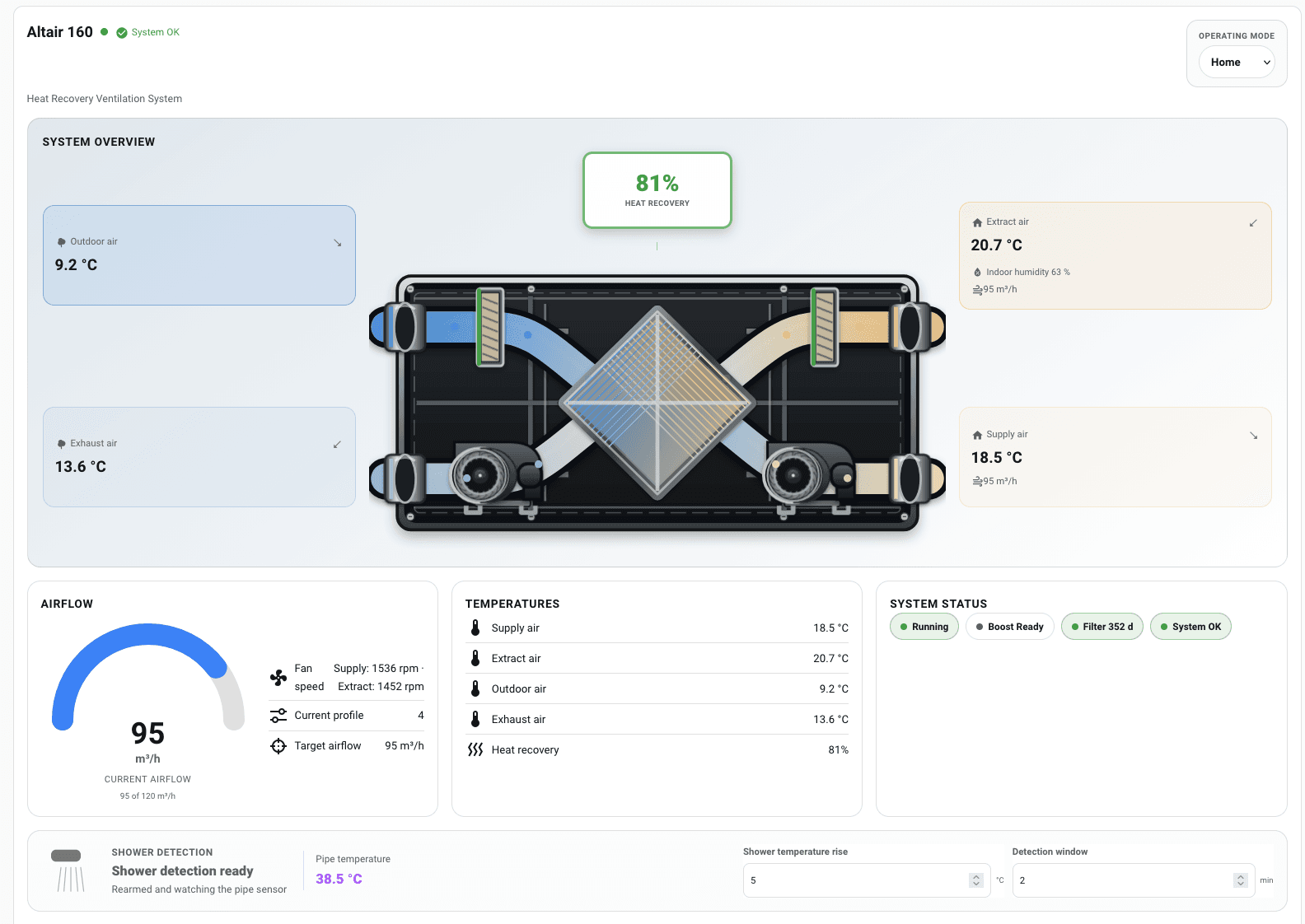
The live Home Assistant dashboard we built for this home — airflow, temperatures, heat recovery and shower-detection status at a glance.
Project overview
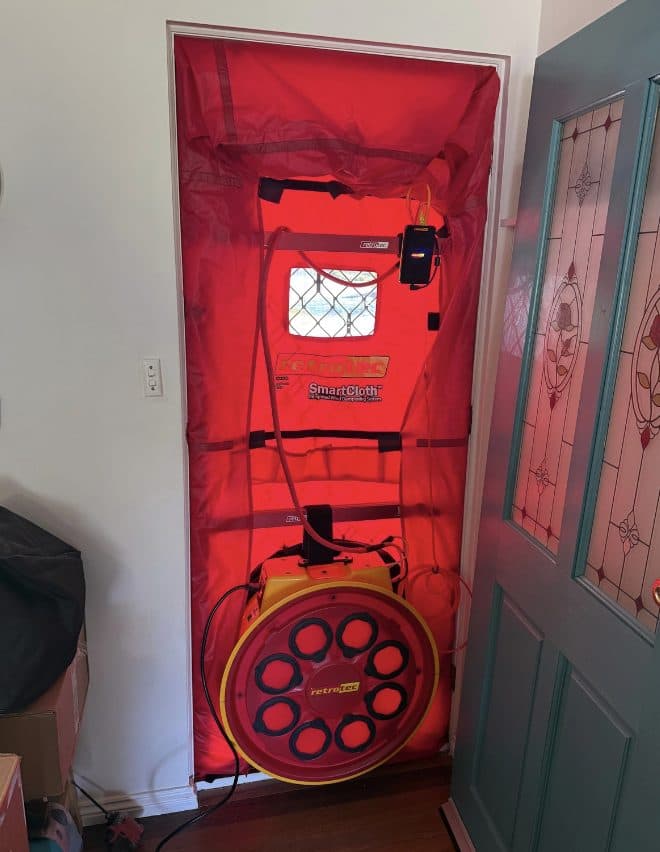
This is our own home — an existing, occupied house at Nairne in the Adelaide Hills, not a new Passive House build. It’s the same house we blower door tested before any works began, where we measured a baseline of 12.5 ACH50 — a leakage rate typical of a lot of older South Australian housing stock. That test gave us a number to work against. This project is what came next: retrofitting an Altair 160 mechanical ventilation heat recovery (MVHR) system into the existing roof space, then building the monitoring and automation layer on top of it.
We know the complaints firsthand, because they were ours — a home that felt stuffy with the windows shut and prone to condensation with them closed in winter, but draughty and uncomfortable when they weren’t. MVHR was the obvious answer to the ventilation problem. What made this project different is what we built around it: a custom Home Assistant integration talking directly to the unit over Modbus, and a purpose-built automatic shower-boost sensor. Between the two, this has become our most heavily instrumented ventilation retrofit — and because it’s our own home, we get to use it as an ongoing test bench for developing these services, not just a one-off installation we hand over and leave.
12.5 ACH50 (baseline)
Pre-retrofit airtightness
Altair 160 MVHR
System installed
CO₂ · RH · Temp — continuous
Monitoring
An older home, sealed just enough to cause problems, not enough to solve them
At 12.5 ACH50, this house wasn’t unusually bad — it’s a fairly ordinary result for its age and construction, and roughly in line with what we see across a lot of existing Adelaide Hills housing stock. But “ordinary” leaky is still a real problem. Uncontrolled air leakage means the home loses conditioned air unevenly — gaps around penetrations, cornices and old window frames leak more than walls do — so some rooms run cold and draughty while others stay stuffy.
There was no mechanical ventilation at all before this project — just extraction fans in the bathroom and kitchen, and whatever air happened to move through the building’s gaps. That combination is exactly what produces condensation on windows and in roof spaces during Adelaide Hills winters: cold surfaces, humid internal air with nowhere controlled to go, and a household reluctant to open windows when it’s 4°C outside.
The instinctive fix — “just open a window” — isn’t a real answer for most of the year. It dumps heating energy outside, doesn’t provide even ventilation to every room, and nobody actually does it consistently at 11pm in July. The house needed a way to get fresh air in and stale, humid air out continuously, without relying on anyone remembering to do anything.
Field note
We didn’t need to guess how leaky this house was — we’d already measured it. The 12.5 ACH50 blower door result is equivalent to roughly a 38 cm round hole permanently open in the building envelope. That’s a useful number to hold onto: it’s not a home that’s about to become airtight overnight, and the ventilation strategy has to work honestly with that starting point, not pretend the house is something it isn’t yet.
Existing homes can absolutely benefit from MVHR. You don’t need Passive House levels of airtightness to get real value from heat recovery ventilation — you just need to be realistic about what it can and can’t do at your home’s current airtightness.
Designing around a house we already live in
Retrofitting MVHR into an occupied home is a different exercise to specifying it for a new build. There’s no clean set of drawings to design ductwork onto before the roof goes on — you’re working with the trusses, insulation, existing services and roof space you’re given, and in this case, we needed to keep living in the house while we did the work.
The existing roof cavity gave us enough room to route semi-rigid insulated ducting to each supply and extract point without opening ceilings. That mattered for two reasons: it kept disruption to the household to a minimum, and it meant we could keep duct runs reasonably short and direct rather than snaking them around obstructions — shorter runs mean less pressure drop, less fan energy, and less opportunity for condensation to form inside the duct itself.
Roof spaces in the Adelaide Hills run cold in winter — colder than the conditioned air moving through the ducts. Left exposed, that gap works against the system twice over: supply air loses some of its recovered heat before it ever reaches a room, and duct surfaces sitting in cold, humid roof-space air become a condensation risk of their own. Once the duct runs were in, we insulated over the top of them, effectively pulling the ductwork inside the home’s thermal envelope rather than leaving it exposed to outdoor-influenced roof-space temperatures — a simple detail that protects both the heat recovery performance and the ducts themselves.
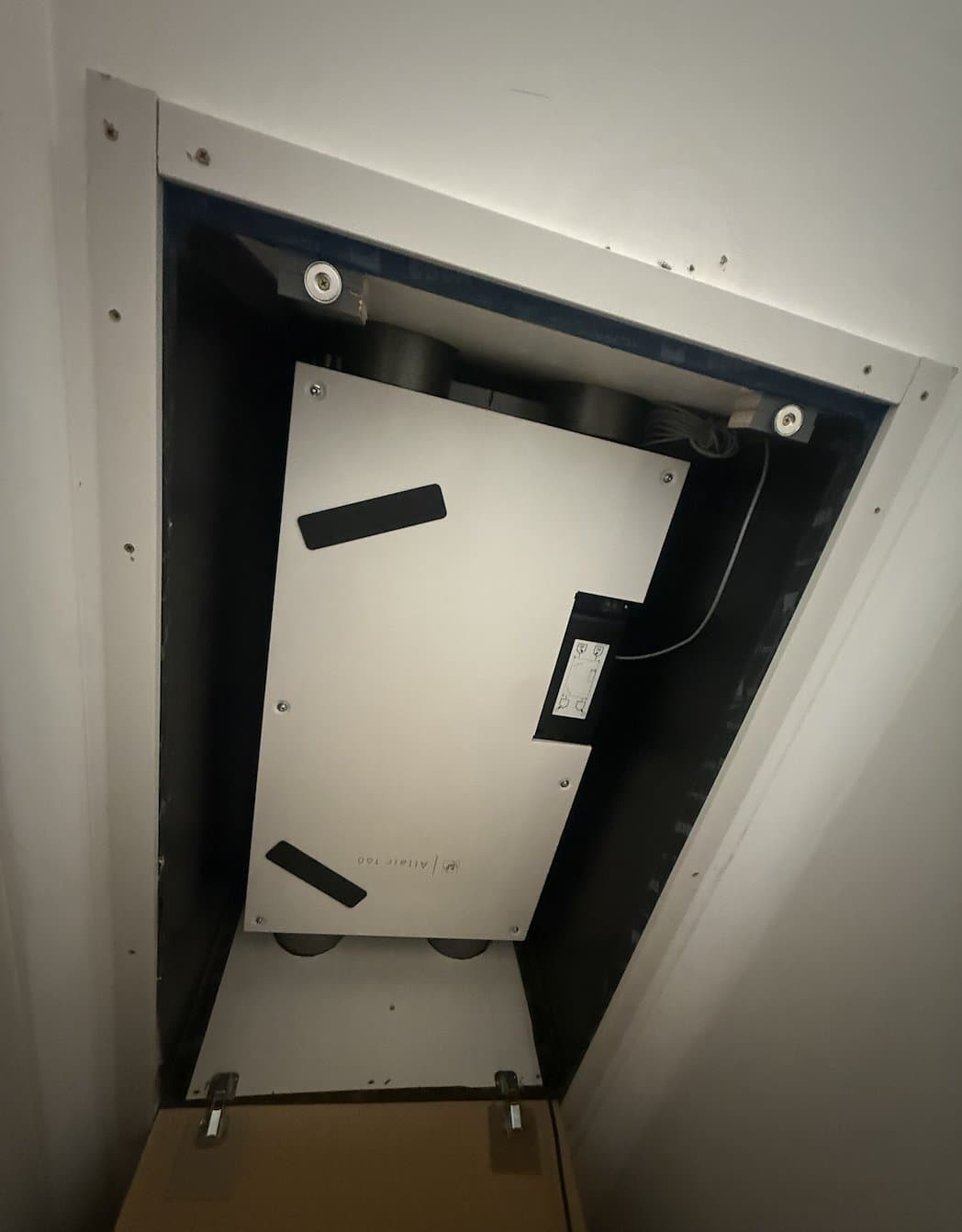
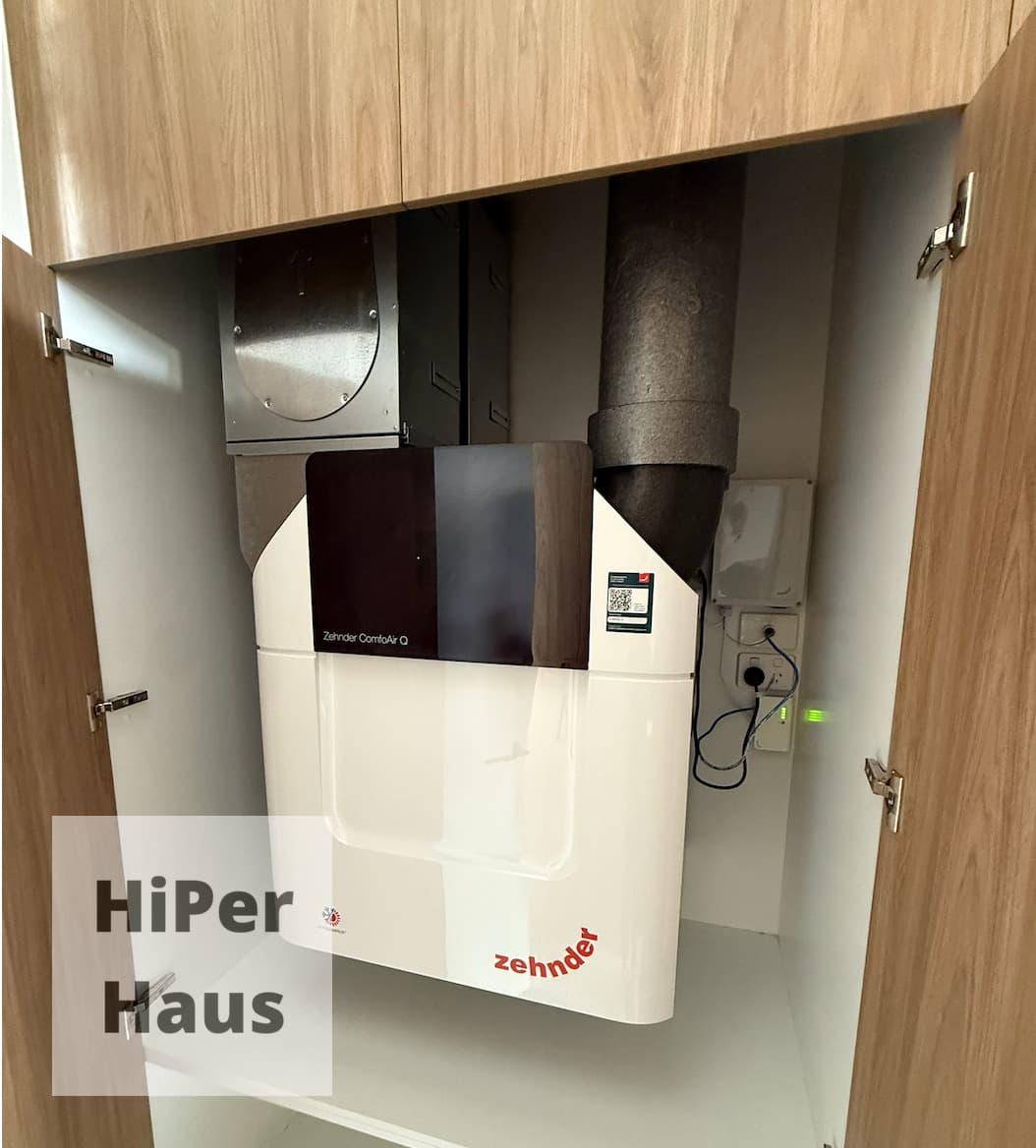
We balanced supply and extract locations the way we do on any MVHR design: fresh air to bedrooms and living areas, extraction from the bathroom, kitchen and any other consistently humid or stale space. The unit itself went into a purpose-built ceiling riser with hatch access — a deliberate serviceability decision. Filters need changing, and a system nobody can reach gets neglected. Being able to open a hatch and get straight to the unit was worth the extra carpentry.
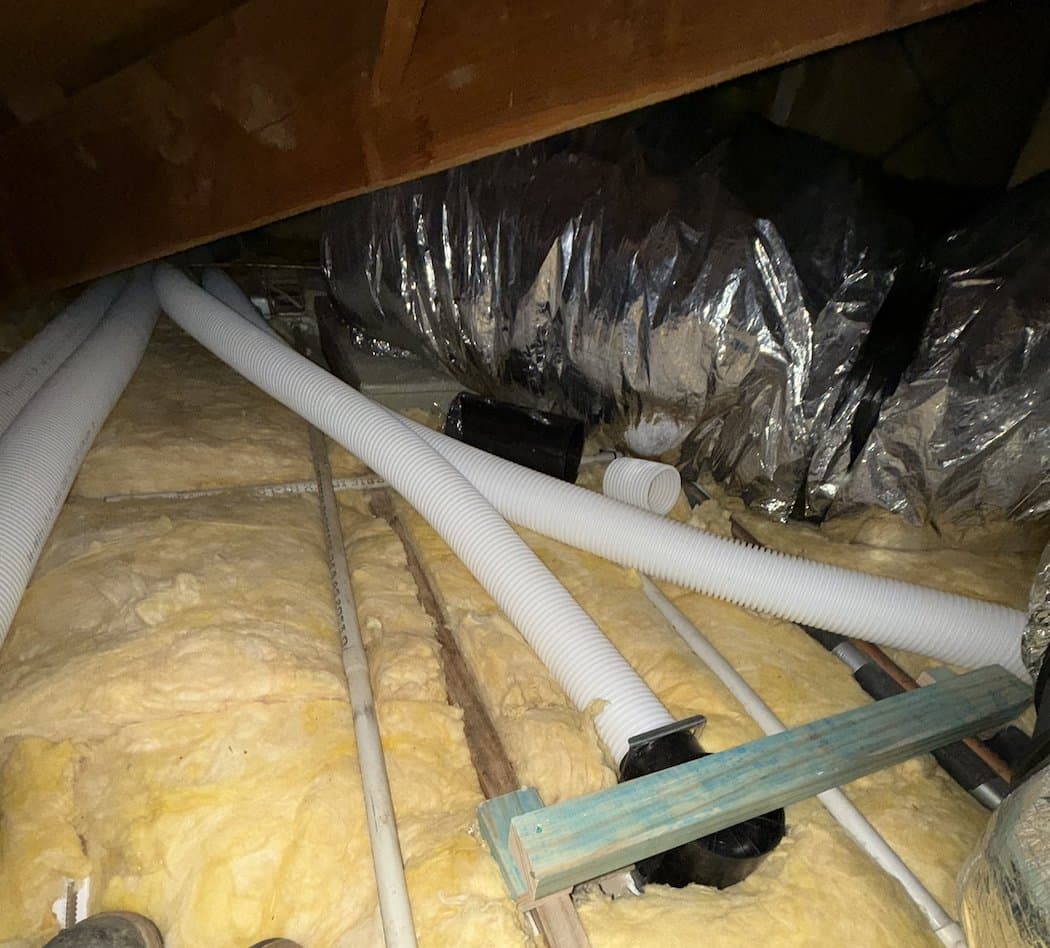
Future serviceability was treated as a design requirement, not an afterthought — hatch access to the unit, and duct runs left where they could be traced later, in case airtightness work on the home itself changes what the ventilation strategy needs to do.
Altair 160 MVHR — ductwork, diffusers, commissioning
The unit installed is an Altair 160 — a compact centralised heat recovery ventilator sized for the supply and extract loads of the home. It sits in the ceiling riser, drawing stale air from the extract points and fresh outdoor air in through a dedicated intake, running both streams across a counterflow heat exchanger before distributing conditioned supply air to bedrooms and living areas.
Ductwork runs through the existing roof cavity to ceiling diffusers at each supply and extract location. Where duct penetrated ceiling linings, we sealed and finished those penetrations properly — a detail that matters both for airtightness and for keeping the system’s performance honest.
Commissioning followed the same process we use on every MVHR install, retrofit or new build: measuring and balancing airflow at every terminal against design targets, not just switching the unit on and assuming it’s working. On the live system today, that’s reading as roughly 95 m³/h of a 120 m³/h target airflow at the current fan profile, with supply and extract fans balanced at 1536 rpm and 1452 rpm respectively — figures we can now track continuously rather than checking once at handover and walking away.
A simple controller, with an extra layer built on top
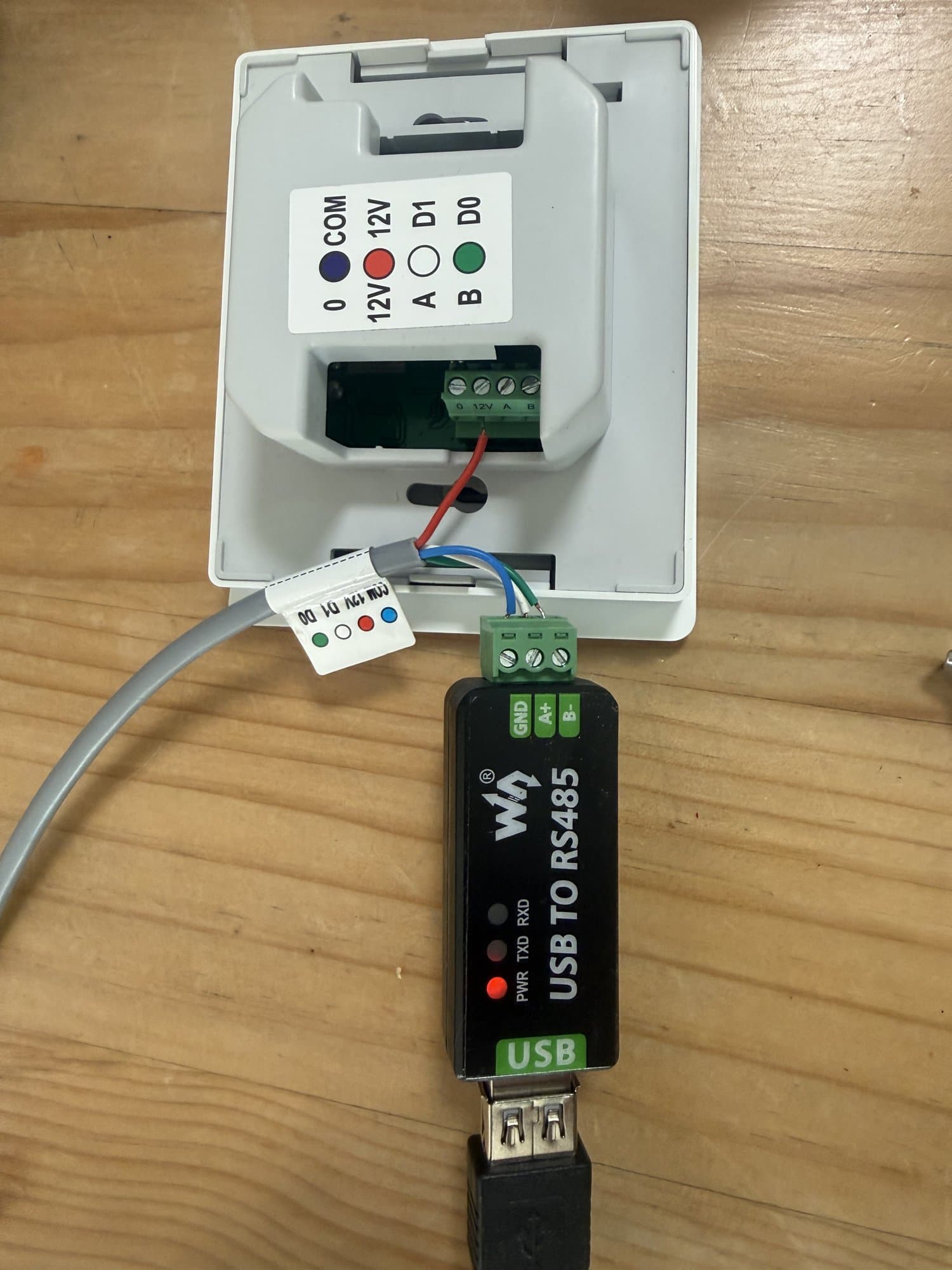
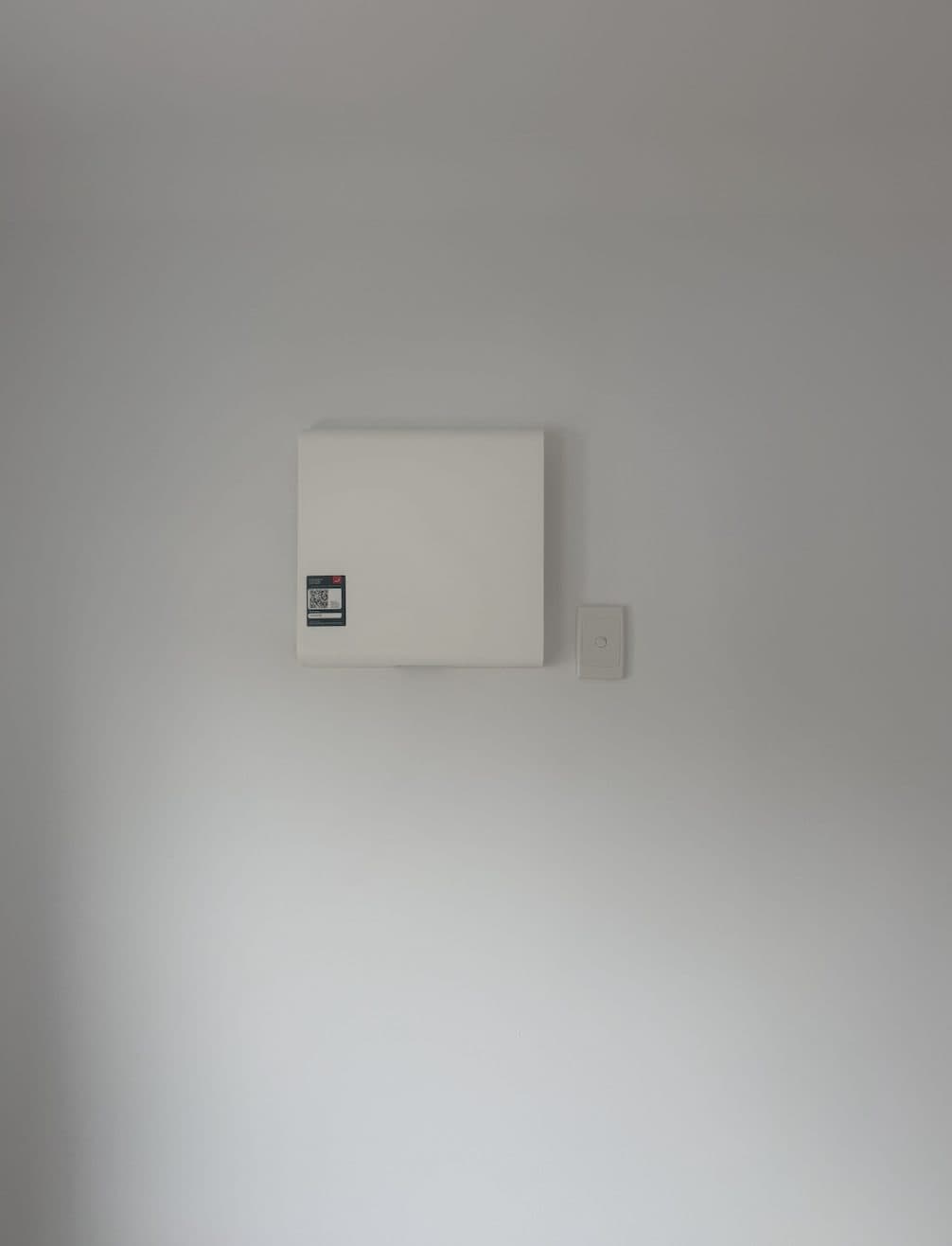
The Altair wall controller is intentionally simple, and it does its job well. It gives straightforward control over fan speed and basic settings — exactly what most households need for everyday operation, with no learning curve involved.
Why we extended the controls
What it doesn’t expose is the kind of monitoring and fine-tuning we wanted as homeowners who enjoy keeping an eye on how our own home’s building performance behaves in detail. For this project, we wanted to be able to:
- Create weekly operating schedules
- Automatically change ventilation rates based on occupancy
- Integrate shower boost into home automation
- Monitor live temperatures and airflow
- Track humidity and filter status
- Receive maintenance notifications
- Record historical performance
- Access the system remotely
- Develop additional automations as the home evolves
Rather than replacing the MVHR controller, we developed a custom Home Assistant integration that communicates with the Altair controller using Modbus — the same protocol the unit already exposes on its controller terminal. The original controller remains fully functional throughout; Home Assistant simply adds an extra layer of monitoring, scheduling and automation on top of it.
That link gives us live, continuous access to the numbers the wall controller only shows a snapshot of: supply, extract, outdoor and exhaust air temperatures, indoor humidity, current airflow against target, fan speeds for both the supply and extract impellers, heat recovery efficiency, operating mode and profile, and filter running-hours.
None of this changes what the Altair physically does — it’s the same unit, the same fans, the same heat exchanger, still fully controllable from the wall as always. What changes is what we can see and automate on top of it: history we can graph instead of a number that resets when you walk away, weekly schedules and occupancy-based airflow instead of a single fixed manual speed, and shower boost folded into the rest of the home’s automation rather than sitting as a separate system. This approach lets the ventilation system adapt to how the home is actually being used, rather than relying solely on manual speed changes.
For a general explainer on how these systems work, see our guide to heat recovery ventilation systems.
Automation should make ventilation invisible. The goal isn’t a more complicated system to operate — it’s a system that quietly does the right thing without anyone needing to think about it, with the data available if you want to look.
Boost that turns itself on — and off
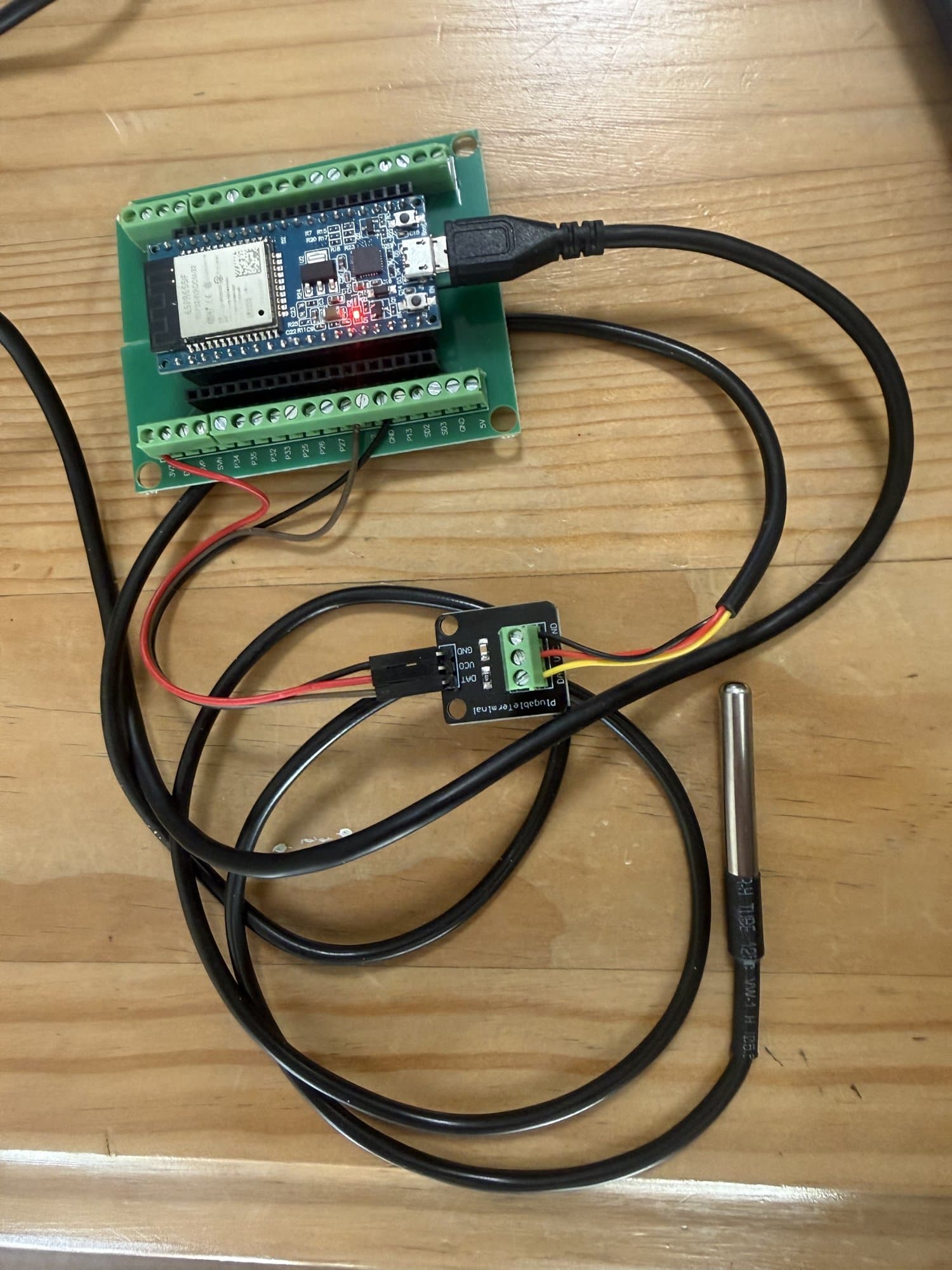
Most bathroom extraction — MVHR-connected or not — relies on someone pressing a boost button, or a humidity sensor reacting after the bathroom is already full of steam, or a timer that runs regardless of whether anyone showered at all. All three have the same failure mode: they depend on a human remembering to do something, or a sensor reacting after the fact.
We took a different approach. A waterproof digital temperature probe is clipped directly to the hot water pipe feeding the shower. When someone turns the shower on, hot water starts moving through that pipe within seconds — and the pipe temperature rises fast. Home Assistant watches that rate of rise: once the pipe warms by more than a set threshold within a short detection window, it knows a shower has started and switches the Altair into boost mode automatically. On the current configuration, that threshold is a 5°C rise inside a 2-minute window — tuned from watching the sensor’s real behaviour, not guessed at.
When the shower finishes and the pipe cools back down, boost ends automatically too. No one has to remember to switch anything off, and the system doesn’t run high-speed extraction for longer than the shower actually needed it to.
This is custom functionality we built specifically for this project — there’s no factory feature that does this. It’s a genuinely simple idea (a temperature sensor and a rate-of-change trigger) but the effect is a bathroom extraction system that behaves the way you’d want it to without ever being told to.
- No buttons to press or remember
- No forgotten boost left running for hours
- No unnecessary fan runtime — and the energy that comes with it
- Fully automatic, based on how the house is actually used
We don’t install a system and walk away
Because it’s our own home, we get to treat it as an ongoing MVHR research platform rather than walking away after handover. The Altair is fully exposed to Home Assistant, so we’re not limited to whatever the wall controller decided was worth logging — we can collect continuous data on airflow, temperatures, heat recovery efficiency and indoor CO₂, relative humidity and temperature over time, and actually watch how the system behaves through different seasons and occupancy patterns, not just at the moment of commissioning.
That data feeds back into real decisions: testing different airflow profiles to see what balances comfort against fan energy, watching how quickly supply air temperature recovers relative to outdoor conditions, and identifying when the system is working harder than it should be — which, in an existing home with known air leakage, is a genuinely useful diagnostic signal.
It also means the automation keeps improving. The shower-boost thresholds you see today were tuned after watching the sensor behave in real use, not set once and forgotten. Future dashboard work, additional automations and new sensors will get added the same way — based on what the data actually shows, not on what we assumed in advance.
What we’re tracking and testing
- Continuous airflow, temperature and heat recovery efficiency logging
- Long-term indoor CO₂, humidity and temperature monitoring
- Different airflow strategies and fan profiles under real occupancy
- Supply-air temperature recovery against outdoor conditions
- Shower-boost detection tuning as we gather more real-world data
- Home Assistant dashboard improvements as new questions come up
Good ventilation isn’t just about fans — it’s about understanding how people actually live in the house, and building the system around that reality rather than a spec sheet.
Where the project is today
Continuous fresh air
Ventilation no longer depends on anyone opening a window — supply air reaches bedrooms and living areas around the clock.
Better comfort
Fewer stuffy, stale rooms and less reliance on draughts through gaps to move air through the house.
Reduced condensation risk
Controlled extraction from humid areas, instead of moisture with nowhere to go, lowers the conditions that drive winter condensation.
Real usability gains
Automatic shower boost and Home Assistant visibility mean the system runs correctly without the household having to manage it.
A genuine performance baseline
Continuous data — not a single commissioning snapshot — means we actually know how the system is behaving, not just how it was set up.
A clearer picture of the building
Watching this system run has taught us more about how this specific existing home behaves than a one-off assessment ever could.
This page will keep changing
We’re deliberately not treating this as a finished case study. As the project develops, we plan to update this page with:
- Improved airtightness works and their impact on system performance
- A follow-up blower door test once further sealing work is done
- Longer-term monitoring data — seasonal trends in CO₂, humidity and temperature
- Energy comparisons before and after the retrofit
- Additional Home Assistant automations as we build them
- New dashboard functionality as our understanding improves
Project gallery
Understand the systems behind this project
Written by
Jonathen HindryFounder of HiPer Haus. ATTMA Level 1 Airtightness Tester, Certified Passive House Tradesperson and 25+ year plumber — blower door testing, MVHR design and heat pump hot water across Adelaide and South Australia.

Wondering if MVHR could work in your existing home?
If you’re planning a renovation or wondering whether MVHR can be retrofitted into your existing home, we’d be happy to discuss your project.