Ventilation & Indoor Air Quality
25 questions, answered from real HiPer Haus projects across South Australia.
Everything people ask about Mechanical Ventilation with Heat Recovery (MVHR) and the indoor air quality problems it solves — CO₂, humidity, damp bathrooms and range hood makeup air.
From the field
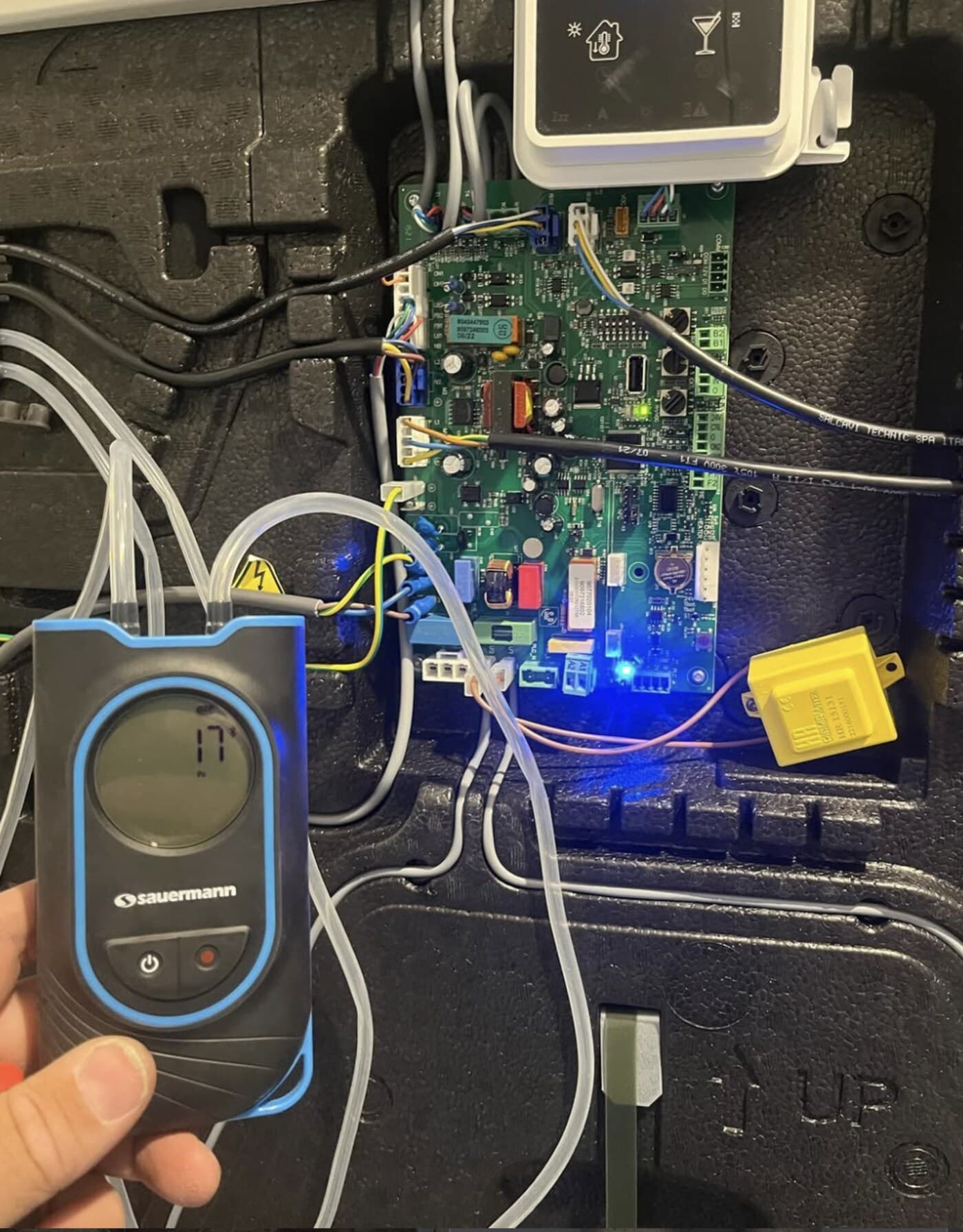
“When we're commissioning MVHR systems we often find airflow that's technically balanced on paper but audibly uneven on site — usually traced back to a duct run with one bend too many. It's a five-minute fix at commissioning and a much bigger one once the ceiling's closed up.”
— Jonathen Hindry, HiPer Haus
The MVHR mistakes we see most often
- Filters left unchanged for years, cutting airflow and fan life well before anyone notices a problem.
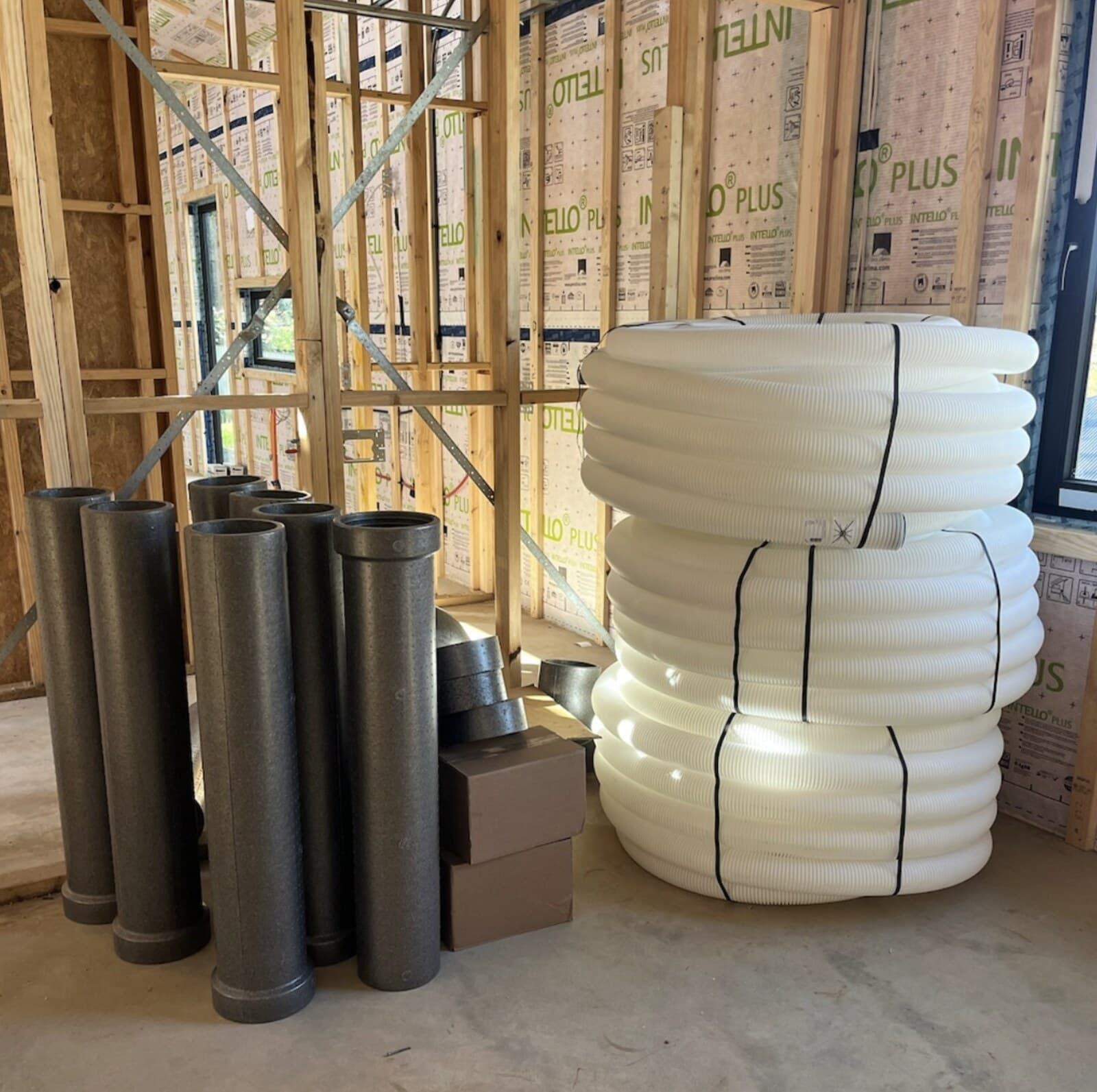
- Ducting undersized or run with too many bends, starving bedrooms and living areas of the airflow the unit was designed to deliver.
- Range hoods specified without any thought to makeup air, so the MVHR ends up fighting negative pressure it was never sized for.
- Systems commissioned once at handover and never rebalanced, even after a renovation changes the home's airtightness.
What is MVHR?
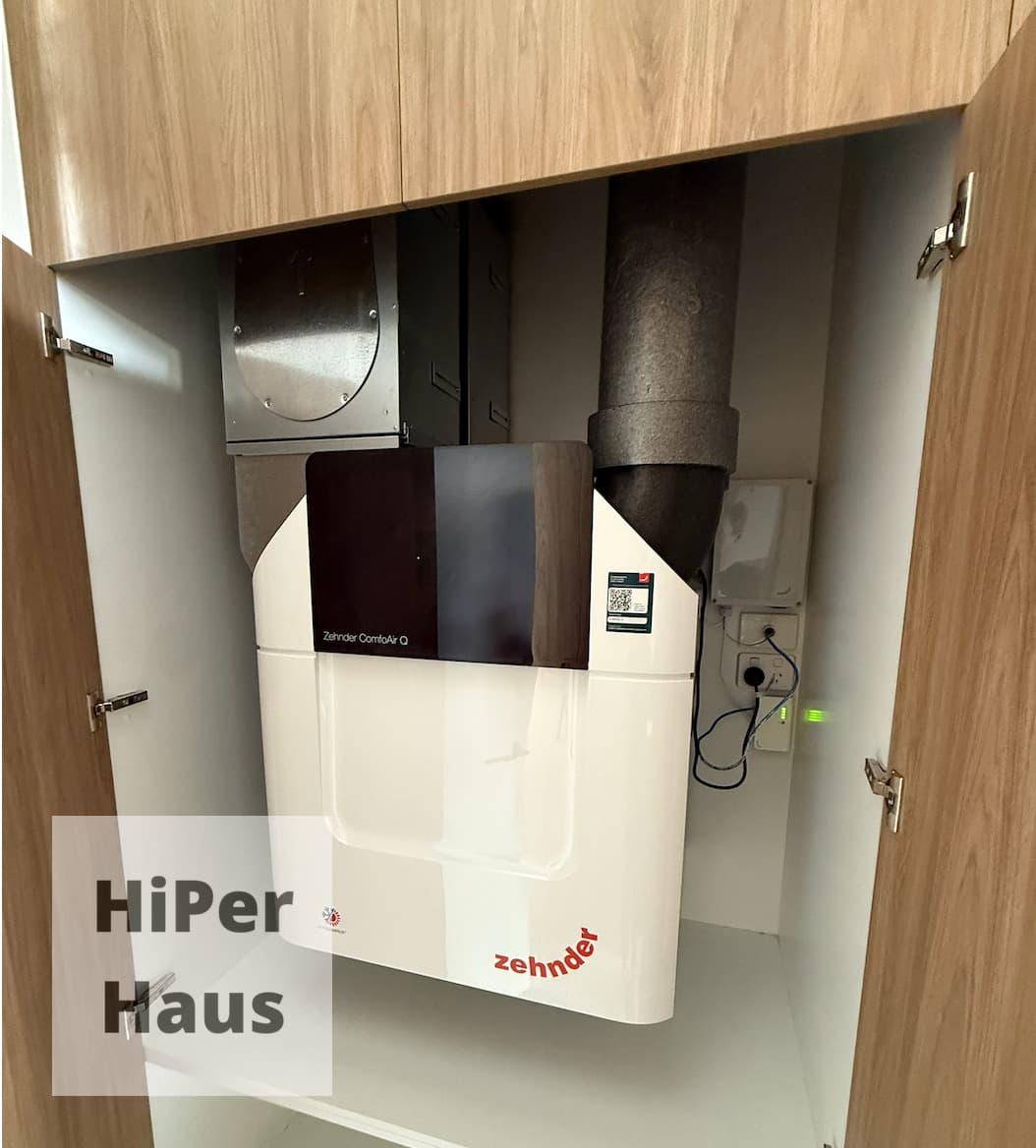
Mechanical Ventilation with Heat Recovery (MVHR) continuously extracts stale, humid air from bathrooms and kitchens and supplies filtered fresh air to living areas and bedrooms, transferring heat between the two air streams so incoming air arrives close to room temperature. It's the standard way we ventilate an airtight home without losing the energy used to heat or cool it.
Read the full guide → What Is MVHR?
Book this service → MVHR Design & Installation
People also ask: How does MVHR work?; Do I need MVHR?; Can I retrofit MVHR into an existing home?
How does MVHR work?
A central unit (or decentralised units) draws stale air from wet rooms and pushes it through a heat exchanger core, where most of its heat is transferred to incoming fresh air before the stale air is expelled outside. The warmed, filtered fresh air is then ducted to bedrooms and living areas, without the two air streams mixing.
Read the full guide → What Is MVHR?
People also ask: What is MVHR?; What's the difference between ducted and decentralised MVHR?; Is MVHR noisy?
Do I need MVHR?
If your home is built or renovated to a reasonably airtight standard, yes. Sealing a home stops draughts, but it also traps the moisture, CO₂ and pollutants that used to leak out through gaps. In the homes we've commissioned, that trade-off is exactly why MVHR is fitted alongside airtightness work, not as an afterthought — without it, an airtight home can develop condensation, mould and poor air quality.
Read the full guide → Why Airtight Homes Need Ventilation
Book this service → MVHR Design & Installation
People also ask: What's the difference between airtightness and ventilation?; Does NCC 2022 require MVHR?
Can I retrofit MVHR into an existing home?
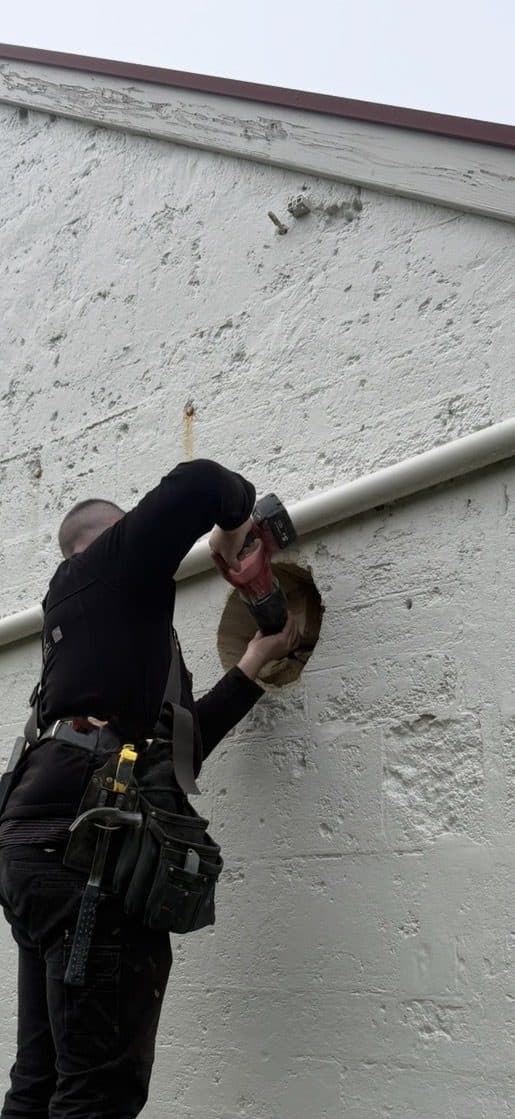
Yes. Existing homes can be fitted with full ducted systems, decentralised through-wall units for individual rooms, or a hybrid of both, depending on ceiling access, budget and which rooms need it most. On our Mount Gambier retrofit, a solid limestone home, we core-drilled a decentralised unit straight through the wall behind a false wall and membrane — there's usually a practical retrofit path even where full ducting isn't possible.
Read the full guide → Retrofitting MVHR Into an Existing Home
Real project → Decentralised MVHR Retrofit — Mount Gambier
People also ask: What's the difference between ducted and decentralised MVHR?; Can I open windows with MVHR installed?
What's the difference between ducted and decentralised MVHR?
Ducted MVHR uses one central unit and a network of ducts to serve the whole house — the most efficient option for new builds. Decentralised MVHR uses individual through-wall units in single rooms, with no ductwork, making it a practical option for apartments, additions, heritage homes or wherever ducting isn't possible.
Read the full guide → Decentralised MVHR for Existing Homes
People also ask: Can I retrofit MVHR into an existing home?; What size MVHR unit do I need?
How much electricity does MVHR use?
An MVHR unit's fans typically draw a small, continuous load — comparable to a couple of LED downlights — because they only need to move air, not heat or cool it. Because the heat exchanger recovers most of the energy already in the outgoing air, running MVHR costs far less than the heating or cooling it saves.
Read the full guide → What Is MVHR?
People also ask: Does MVHR cool the house?; Can MVHR replace air conditioning?
How often should MVHR filters be changed?
Most units need filter replacement every 6–12 months depending on the model and local air quality. We recommend checking filters at the 6-month mark and replacing them at least annually — it's the single most common maintenance item we find neglected when we're called out to a unit we didn't originally install. Replacement filters are available for all units we service, regardless of brand.
Book this service → MVHR Design & Installation
People also ask: Can I clean MVHR filters myself?; Do you service MVHR units you didn't install?
Can I clean MVHR filters myself?
Coarse pre-filters (G-class) can usually be vacuumed. Fine filters (F7 and similar) should be replaced rather than cleaned — cleaning damages the filter media and reduces its ability to capture fine particulates and pollen. We stock replacement filters for all major MVHR brands.
People also ask: How often should MVHR filters be changed?; My MVHR is making noise — what should I do?
Can I open windows with MVHR installed?
Yes — MVHR doesn't lock windows shut, and opening them occasionally won't damage the system. But the whole point of MVHR is that you shouldn't need to: it's designed to supply continuous fresh air without the heat loss, noise, security risk or pollen that comes with open windows.
Read the full guide → Why Airtight Homes Need Ventilation
People also ask: Do I need MVHR?; Does MVHR cool the house?
Does MVHR remove humidity?
MVHR continuously extracts moisture-laden air from bathrooms, laundries and kitchens, which is the biggest factor in controlling everyday humidity. It doesn't actively dehumidify supply air the way a dedicated dehumidifier does, but by constantly removing wet air at the source, it keeps average indoor humidity in a healthier range.
Read the full guide → What Is Relative Humidity?
People also ask: How do I reduce condensation in my home?; Does airtightness stop mould?
Does MVHR cool the house?
No. MVHR's job is air quality and moisture control, not temperature control — it exchanges heat between outgoing and incoming air but doesn't actively cool the home the way an air conditioner does. On hot days it still brings in outdoor-temperature air, so it works alongside a heating and cooling system, not instead of one.
Read the full guide → Heating & Cooling for Passive Houses
People also ask: Can MVHR replace air conditioning?; How much electricity does MVHR use?
Can MVHR replace air conditioning?
No. MVHR ventilates the home and recovers heat between air streams; it isn't sized or designed to add or remove enough heat to condition a room. High-performance homes still need a heating and cooling system — usually a much smaller one than a leaky, unventilated home would need, because the envelope and MVHR are already doing so much of the work.
Read the full guide → Heating & Cooling for Passive Houses
People also ask: Does MVHR cool the house?; What size air conditioner do I need?
What happens during a power outage?
MVHR fans stop, so active fresh air supply and extraction pause until power returns. An airtight home will still have some background air change through the envelope and any openable windows, but for extended outages, opening a window periodically is a reasonable short-term fallback until the system is running again.
People also ask: Is MVHR noisy?; Do I need MVHR?
Is MVHR noisy?
A correctly designed and commissioned system should be barely audible — quiet, even airflow from supply and extract terminals is one of the signs a system is running properly. When we're called out to a noisy unit, it's almost always a dirty filter, worn fan bearings, an undersized duct or a system that was never properly balanced at commissioning.
People also ask: My MVHR is making noise — what should I do?; How do I know if my MVHR system is running correctly?
Why do I need MVHR if my home isn't Passive House?
MVHR isn't a Passive House exclusive — any home built or renovated to a reasonably airtight standard benefits from it, and NCC 2022 now links ventilation requirements to airtightness results for all new SA homes, not just certified projects. The tighter the envelope, the more a home relies on mechanical ventilation to stay healthy.
Read the full guide → NCC 2022 Ventilation & Airtightness for SA Homes
People also ask: Does NCC 2022 require MVHR?; Why have a blower door test?
Does NCC 2022 require MVHR?
NCC 2022 doesn't name MVHR specifically. Its optional H6V3 building-envelope sealing Verification Method requires mechanical ventilation where verified air permeability is not more than 5 m³/(h·m²) at 50 Pa. That unit is not ACH50, and the requirement is not a universal trigger for every home. MVHR can form part of a compliant project solution where it is designed and commissioned for the nominated pathway.
Read the full guide → NCC 2022 Ventilation & Airtightness for SA Homes
People also ask: What does ACH50 mean?; Does NCC 2022 require a blower door test?
What size MVHR unit do I need?
Unit size depends on the home's floor area, number of bedrooms and wet rooms, and airtightness level — it's a design calculation, not a rule of thumb. Undersizing leaves rooms under-ventilated; oversizing wastes energy and money. We size and design systems as part of our MVHR service, and it's a step we won't skip even under time pressure on site.
Book this service → MVHR Design & Installation
People also ask: How does MVHR work?; Can I retrofit MVHR into an existing home?
Why does my home feel stuffy without proper ventilation?
A stuffy feeling, especially overnight in bedrooms, is usually a sign of rising CO₂ from an airtight room with no fresh air supply. Levels build quickly with the door and windows closed, and are linked to poor sleep and morning headaches — problems that largely disappear once a room has continuous mechanical ventilation.
Read the full guide → Poor Sleep & Morning Headaches from CO₂
Related calculator → Bedroom CO₂ Calculator
People also ask: Can high CO₂ make me feel tired or give headaches?; Do I need MVHR?
Can high CO₂ make me feel tired or give headaches?
Yes. CO₂ concentrations that build up in a closed, airtight bedroom overnight are strongly linked to poor sleep quality, grogginess and headaches on waking. It's one of the most common — and most fixable — indoor air quality complaints in modern airtight homes without adequate ventilation.
Read the full guide → Poor Sleep & Morning Headaches from CO₂
Related calculator → Bedroom CO₂ Calculator
People also ask: Why does my home feel stuffy without proper ventilation?; Does MVHR remove humidity?
Why are my bathrooms damp even with an exhaust fan?
Many exhaust fans installed in new homes don't move enough air to meet NCC 2022's requirements, or aren't ducted correctly to outside, so steam and humidity linger long after a shower. It's one of the more common issues we're called out to diagnose — a correctly sized and commissioned ventilation system, whether a compliant exhaust fan or MVHR extract point, clears a bathroom in minutes, not hours.
Read the full guide → Damp Bathrooms That Never Dry
People also ask: Does MVHR remove humidity?; Does airtightness stop mould?
Are range hoods a problem in airtight homes?
A powerful range hood can extract more air than an airtight home can easily replace, creating negative pressure that pulls air back through gaps, worsens draughts, and can backdraft flued gas appliances like heaters or hot water systems — a genuine safety risk. Airtight homes need a makeup air strategy matched to the hood's extraction rate.
Read the full guide → Range Hoods in Airtight Homes
Related calculator → Range Hood Makeup Air Calculator
Book this service → Range Hoods for Airtight Homes
People also ask: What is makeup air and do I need it?
What is makeup air and do I need it?
Makeup air is fresh air deliberately introduced to replace what a range hood extracts, preventing the negative pressure that causes backdraughting and makes doors hard to open. Whether you need a dedicated makeup air system depends on your hood's extraction rate and how airtight your home is — our calculator gives a quick estimate.
Related calculator → Range Hood Makeup Air Calculator
Read the full guide → Range Hoods in Airtight Homes
People also ask: Are range hoods a problem in airtight homes?
Do you service MVHR units you didn't install?
Yes. We service, commission and maintain MVHR units from most major brands, regardless of who originally installed them. Contact us with your unit's make and model and we can advise on servicing options.
Book this service → MVHR Design & Installation
People also ask: How often should MVHR filters be changed?; My MVHR is making noise — what should I do?
My MVHR is making noise — what should I do?
Unusual noise usually points to a dirty filter, worn fan bearings, a loose duct connection or an object caught in a duct. It's worth investigating promptly, since running a struggling unit for longer can cause further damage. Book a diagnostic visit and we'll identify and fix the cause.
People also ask: Is MVHR noisy?; How do I know if my MVHR system is running correctly?
How do I know if my MVHR system is running correctly?
A healthy system delivers quiet, even airflow from supply terminals, consistent extract from bathrooms and the kitchen, no unusual odours and no condensation on cold surfaces. If any of that feels off, it's worth booking a diagnostic visit before a small issue becomes a bigger one.
People also ask: My MVHR is making noise — what should I do?; Is MVHR noisy?
Written by
Jonathen HindryFounder of HiPer Haus. ATTMA Level 1 Airtightness Tester, Certified Passive House Tradesperson and 25+ year plumber — blower door testing, MVHR design and heat pump hot water across Adelaide and South Australia.

More from the knowledge base
← Back to the full FAQ knowledge base