Blower Door Testing & Airtightness
30 questions, answered from real HiPer Haus projects across South Australia.
Everything people ask before, during and after an ATTMA Level 1 blower door test — plus the airtightness education that sits behind it. Answers link to our in-depth guides, real HiPer Haus projects and testing service.
From the field
“Across the blower door tests we've completed so far, sliding doors, exhaust fans and ceiling access hatches have shown up as leakage points on every single one. They're inexpensive to seal during construction and considerably harder to fix once the plasterboard's up.”
— Jonathen Hindry, HiPer Haus
The five leaks we find on almost every test
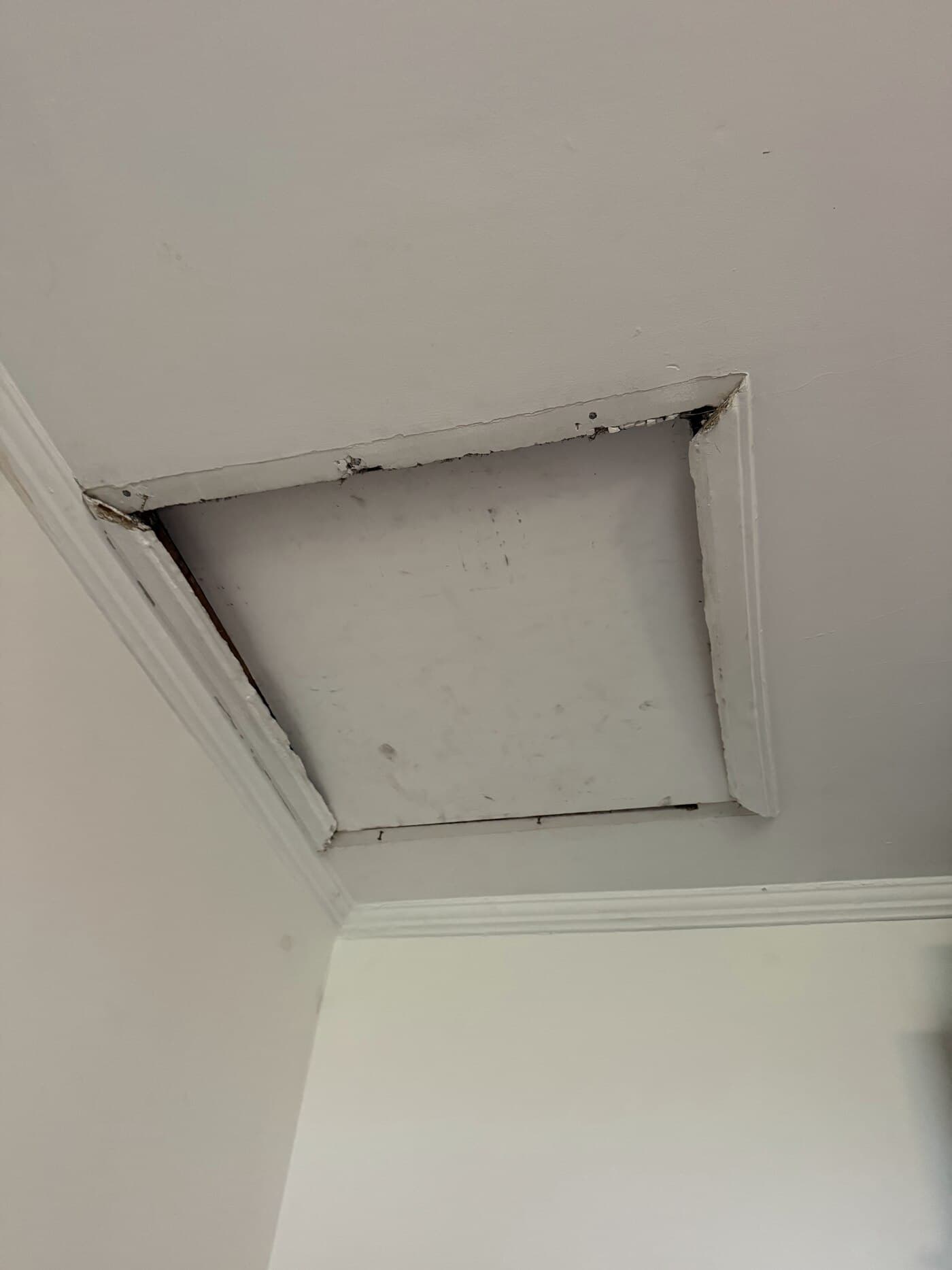
- Downlights and ceiling access hatches left unsealed above the insulation layer.
- Exhaust fan and rangehood ducts with loose, missing or backdraught dampers.
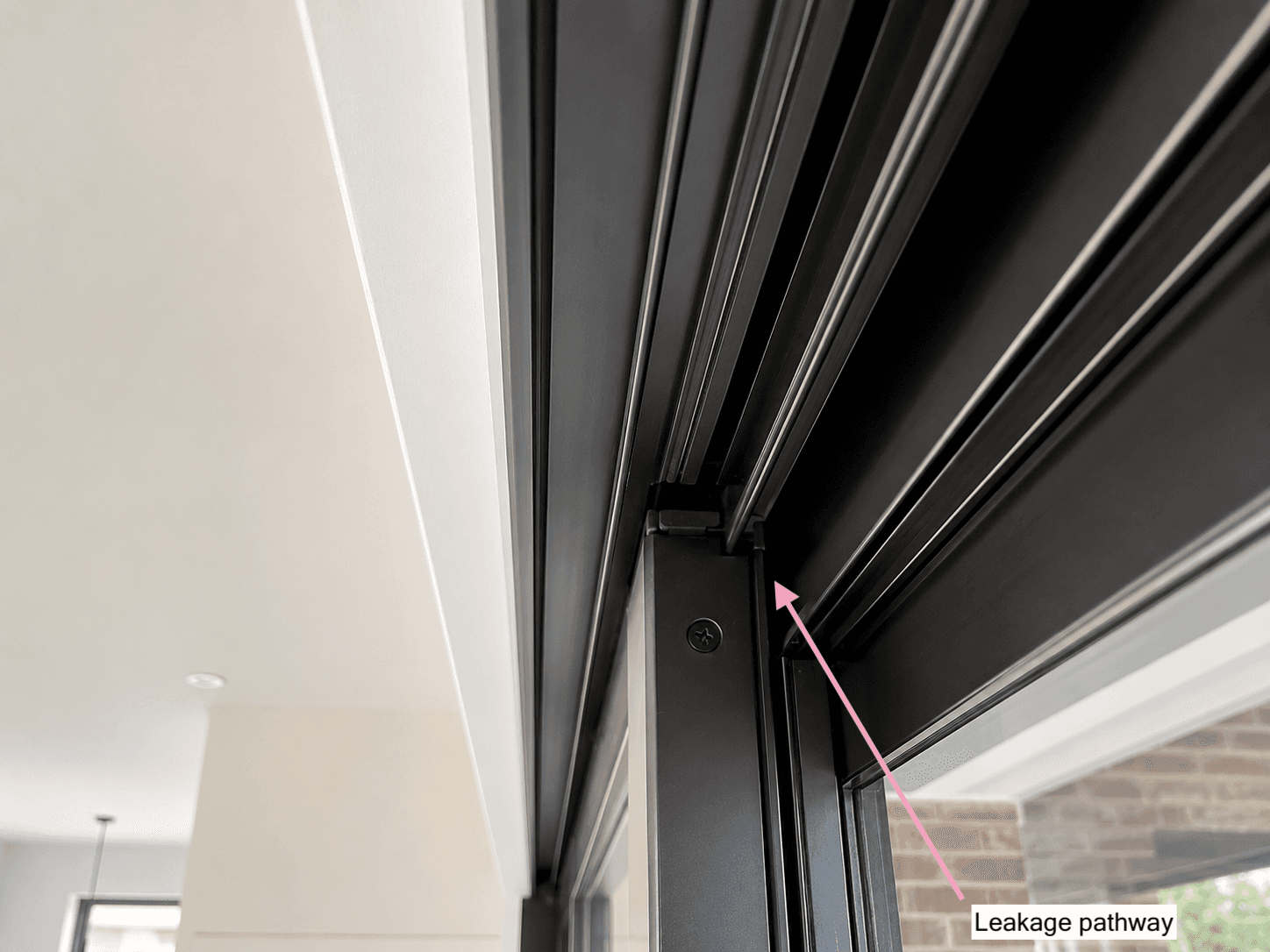
- Sliding door tracks that were never gasketed — the top leak found on our Willunga shouse conversion, despite dampers already fitted elsewhere.
- Service penetrations for plumbing, electrical and data sealed on one side of the wall only.
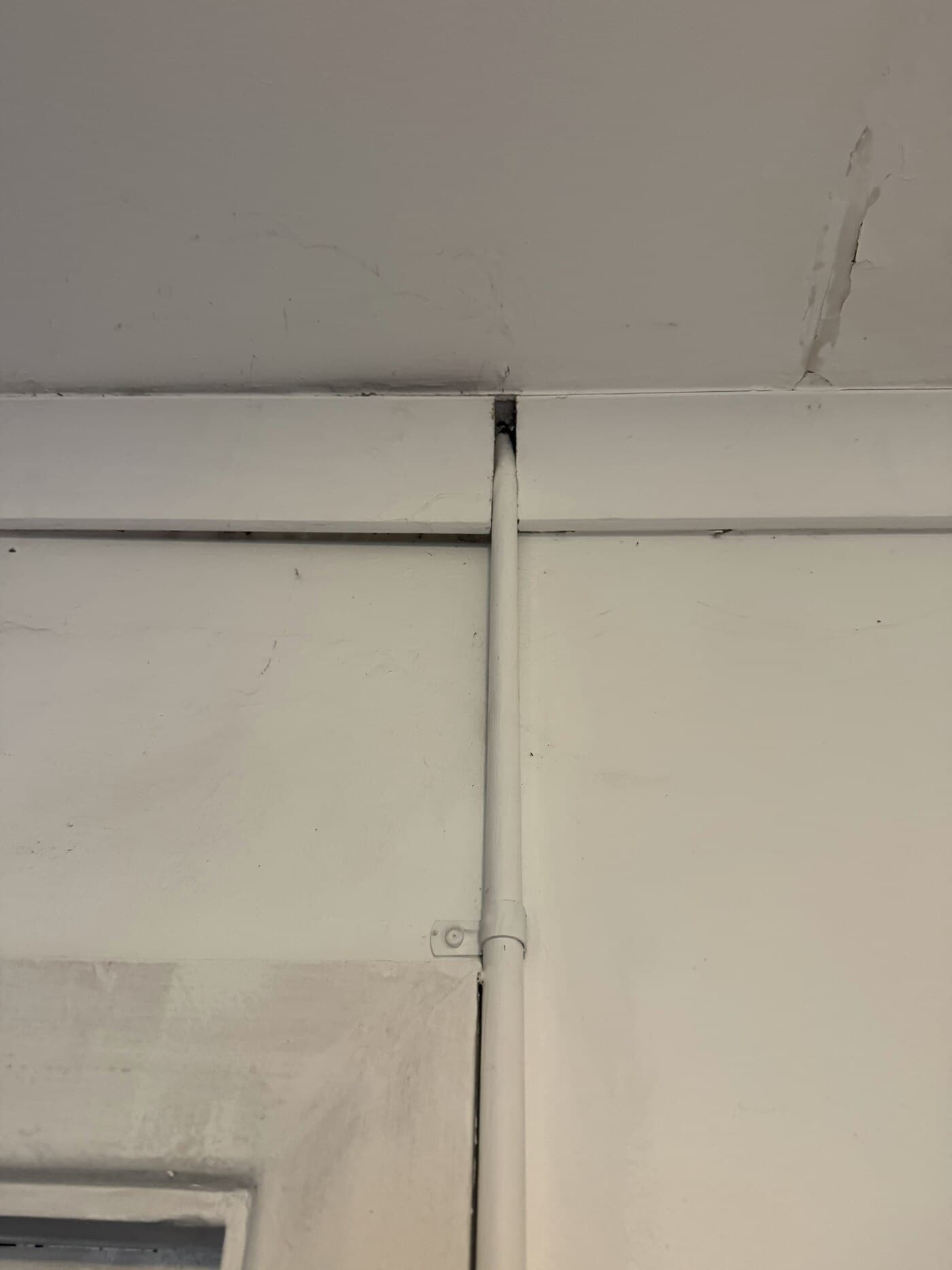
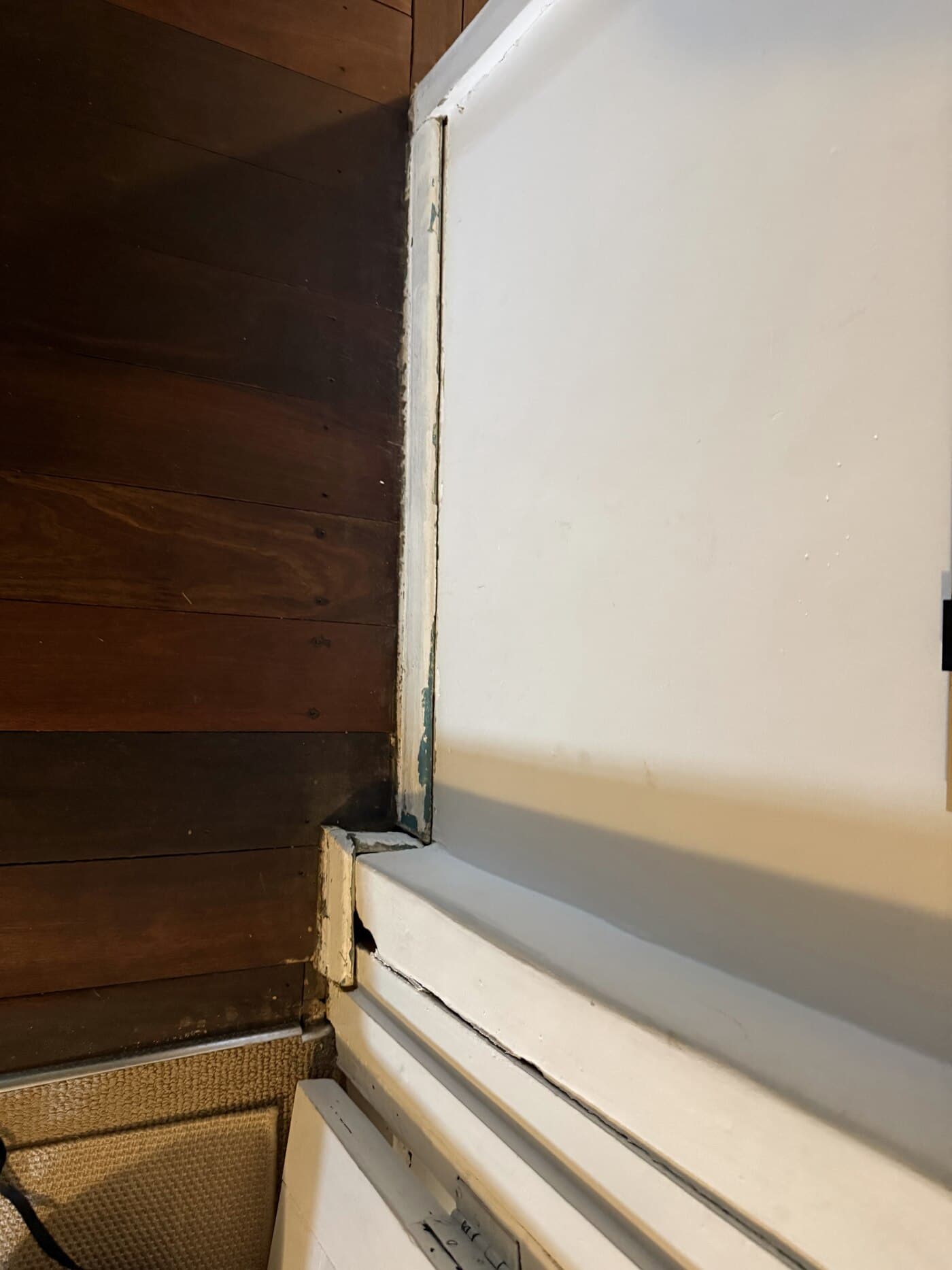
- Cornice gaps and window-frame junctions, both flagged during our Thebarton pre-renovation test.
Is HiPer Haus ATTMA accredited for blower door testing?
Yes. HiPer Haus blower door testing is carried out by an ATTMA Level 1 Airtightness Tester. Level 1 covers homes and other simple buildings, with independently assessed competence, calibrated equipment, and standardised testing and reporting to ATTMA technical standards based on ISO 9972.
Book this service → ATTMA Level 1 Blower Door Testing
People also ask: What is a blower door test?; What is included in the blower door test report?
What is a blower door test?
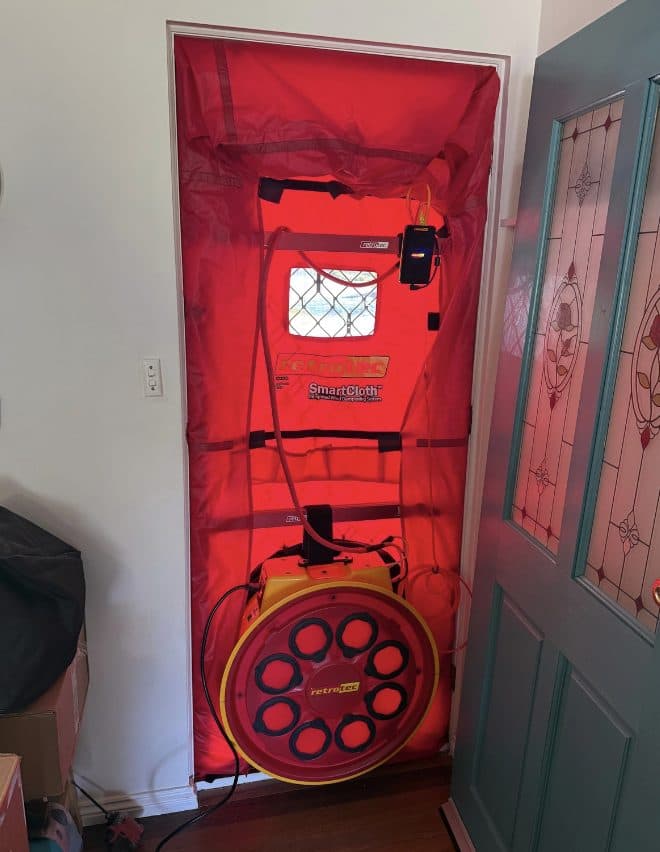
A blower door test uses a calibrated fan sealed into an external doorway to pressurise or depressurise a home, measuring exactly how much air leaks through the building envelope. The result is expressed as ACH50 — air changes per hour at 50 Pascals — giving an objective, repeatable measure of how airtight the building actually is. We run a Retrotec system on every test, the same rig you'll see set up at our Nairne project.
Read the full guide → What Is a Blower Door Test?
Related guide → What Makes a House Airtight?
People also ask: What does ACH50 mean?; Can a blower door test find where the leaks are?
Why have a blower door test?
It's the only way to know how airtight a building actually is — visual inspection can't detect the air leakage that drives draughts, high energy bills, condensation and mould. Testing during construction (before linings go up) also lets leaks be fixed cheaply, rather than discovered and repaired after the home is finished.
Read the full guide → Why Every New Home Should Have a Blower Door Test
Book this service → Blower Door Testing
People also ask: When should a blower door test be done?; Can existing homes be tested?
When should a blower door test be done?
Ideally at two stages: a mid-construction test once the air barrier is complete but before internal linings go up (so leaks can still be fixed easily), and a final test at practical completion for compliance or certification. Existing homes can be tested at any time — on our Thebarton and Nairne projects, we tested before the renovation started, purely to set a baseline.
Read the full guide → Preparing for a Blower Door Test
People also ask: Can existing homes be tested?; What preparation is required before a blower door test?
How long does a blower door test take?
Most homes are tested in 1–2 hours depending on size and complexity. Allowing for setup, pressurisation runs, smoke-pencil leak diagnostics and pack-down, plan for around 2–3 hours on site.
Book this service → Blower Door Testing
People also ask: What preparation is required before a blower door test?; Is thermal imaging included?
What preparation is required before a blower door test?
The guiding principle is to test the home in its normal operational state. Exhaust fans and range hoods are switched off, while they and all permanent vents remain as installed — open or closed according to their design, and never taped or temporarily sealed. The MVHR system is switched off; only its external intake and exhaust vents are temporarily sealed. Internal doors are left open, while external doors and windows are closed.
Read the full guide → Preparing for a Blower Door Test
People also ask: How long does a blower door test take?; Do I need to leave the house during testing?
What does ACH50 mean?
ACH50 is “air changes per hour at 50 Pascals” — the number of times the entire volume of air in a home would be replaced through leaks in one hour, if the building were pressurised to a standard 50 Pascals. It's the universal metric blower door results are reported in, letting homes be compared on a level playing field.
Read the full guide → What Is ACH50?
People also ask: What is a good ACH50 result?; How airtight is the average Australian home?
What is a good ACH50 result?
It depends on the target you're building to. NCC 2022 H6V3 uses an air-permeability result in m³/(h·m²), not ACH50, while Passive House certification requires 0.6 ACH50 or better and many project specifications sit somewhere in between. There's no single “good” ACH50 number — a good result is one that meets or beats your project's stated target.
Read the full guide → What Is ACH50?
People also ask: Can you fail a blower door test?; What does ACH50 mean?
Can you fail a blower door test?
In most Australian residential projects there isn't a universal pass or fail result. The target depends on the project standard — NCC requirements, Passive House certification, or a builder's own specification — and the test's real value is identifying where air is leaking so those areas can be improved before the next test or handover. On our Willunga shouse conversion, the result was 3.556 ACH50, with the leakage traced mainly to the sliding doors and exhaust fans — a clear, fixable finding rather than a fail.
Read the full guide → Can You Fail a Blower Door Test?
Real project → Blower Door Test — Willunga Shouse Conversion
People also ask: What happens if my result doesn't meet target?; What is a good ACH50 result?
What happens if my result doesn't meet target?
The test itself identifies where the leaks are, using smoke pencils and (where conditions allow) thermal imaging, so they can be targeted directly rather than guessed at. A good result is built through sequencing and detailing during construction, not achieved by chasing leaks after the fact — our guide covers the details that matter most.
Read the full guide → How to Pass a Blower Door Test
People also ask: Can you fail a blower door test?; What air sealing details matter most during construction?
Can existing homes be tested?
Yes. Existing homes, renovations and shed conversions can all be blower door tested — it's often done before a renovation to establish a baseline, or afterwards to verify the airtightness work achieved its target. We've tested a shed-to-house conversion at Willunga and a pre-renovation home at Thebarton on exactly this basis.
Real project → Blower Door Test — Thebarton Renovation & Extension
Real project → Blower Door Test — Willunga Shouse Conversion
People also ask: When should a blower door test be done?
Do I need to leave the house during testing?
No. The test doesn't produce anything hazardous — you're welcome to stay and watch, and many homeowners find it genuinely interesting to see where the leaks in their own home are with a smoke pencil.
People also ask: Does blower door testing damage anything?; Can a blower door test find where the leaks are?
Does blower door testing damage anything?
No. The equipment temporarily seals into a doorway using an adjustable frame and fabric panel, with no fixings into the building. Once testing is complete, the frame is removed and the doorway is left exactly as it was.
People also ask: Do I need to leave the house during testing?; How long does a blower door test take?
Can a blower door test find where the leaks are?
Yes — while the building is pressurised or depressurised, a smoke pencil reveals exactly where air is moving through gaps, and thermal imaging (where conditions permit) can pinpoint hidden leaks behind linings. This diagnostic step is often more valuable than the ACH50 number itself. On our Thebarton test, it's exactly how we traced leaks to a cornice gap, a window frame junction and a ceiling access hatch.
Read the full guide → Common Air Leaks Found During Blower Door Testing
People also ask: Is thermal imaging included?; What are the most common air leaks found during testing?
Is thermal imaging included?
Thermal imaging may be used where conditions permit, alongside smoke-pencil diagnostics, to help pinpoint hidden air leaks behind linings and finishes. It's a diagnostic tool used as part of the test, not a separate service.
Book this service → Blower Door Testing
People also ask: Can a blower door test find where the leaks are?
How much does a blower door test cost?
Cost depends on the size of the home, the number of tests required (mid-construction and final, for example) and location. Get in touch with your home's details and we'll provide a fixed quote.
Book this service → Blower Door Testing
People also ask: How long does a blower door test take?; When should a blower door test be done?
How airtight is the average Australian home?
CSIRO's 2024 study tested 233 new Australian homes with a blower door and found most performed well behind international airtightness standards, with wide variation between builders and building types. It's the most robust Australian-specific benchmark available, and useful context if you're wondering how your own result compares — on the tests we've completed so far, we've already seen results ranging from single digits to well over 10 ACH50 on the same street.
Read the full guide → How Airtight Is the Average Australian Home?
People also ask: What is a good ACH50 result?; What does ACH50 mean?
What is airtightness?
Airtightness describes how well a building envelope resists uncontrolled air leakage through gaps, cracks and poorly sealed junctions — as distinct from insulation, which resists heat flow through materials. A continuous air barrier, wrapping the entire floor, wall and roof envelope, is what a blower door test actually measures.
Read the full guide → What Makes a House Airtight?
People also ask: What is an air barrier?; Does insulation make a house airtight?
Is an airtight home healthy?
Yes — provided it's ventilated properly. Airtightness on its own just stops uncontrolled leakage; paired with mechanical ventilation (typically MVHR), it gives you continuous filtered fresh air, stable humidity and none of the draughts, dust and outdoor pollutants that leak in through a poorly sealed envelope.
Read the full guide → Why Airtight Homes Need Ventilation
People also ask: Can a home be too airtight?; What's the difference between airtightness and ventilation?
Can a home be too airtight?
Not in terms of the envelope itself — there's no such thing as “too airtight” for the building fabric. What matters is that ventilation is sized to match: the tighter the envelope, the more a home depends on mechanical ventilation, rather than gaps, to supply fresh air.
Read the full guide → Why Airtight Homes Need Ventilation
People also ask: Is an airtight home healthy?; Do I need MVHR?
Does airtightness stop mould?
Airtightness on its own doesn't stop mould — in fact, an airtight home with no planned ventilation is a common cause of it, because moisture that used to leak out through gaps now has nowhere to go. Airtightness plus properly sized ventilation is what actually controls the humidity that mould needs to grow.
Read the full guide → Airtightness and Mould
People also ask: Does MVHR remove humidity?; Why are my bathrooms damp even with an exhaust fan?
Does airtightness reduce heating and cooling costs?
Yes, substantially. Uncontrolled air leakage is one of the biggest drivers of heating and cooling load in a typical home — every gap is effectively a hole letting conditioned air out and outdoor air in. Sealing the envelope reduces that load significantly, which is why airtight homes can run smaller, cheaper heating and cooling systems.
Read the full guide → Heating & Cooling for Passive Houses
Related guide → Top 5 Building Mistakes That Ruin Home Comfort
People also ask: Does a high-performance home need less heating and cooling capacity?
How does airtightness affect bushfire smoke?
A well-sealed envelope significantly reduces how much outdoor smoke infiltrates a home during a bushfire smoke event, provided doors and windows stay closed. MVHR systems fitted with appropriate filters can also be run on recirculate or paused, depending on the model, to further limit smoke entering the home.
Read the full guide → What Makes a House Airtight?
People also ask: What is MVHR?
How does airtightness affect noise?
A continuous, well-sealed air barrier — including sealed penetrations, gaskets around windows and doors, and no gaps in the building fabric — noticeably reduces external noise transmission, since air gaps are also sound paths. It's a secondary benefit many owners notice before they notice the energy savings.
Read the full guide → What Makes a House Airtight?
People also ask: What is an air barrier?
Does insulation make a house airtight?
No — they're separate things that need to work together. Insulation slows heat transfer through materials; airtightness stops uncontrolled air movement through gaps. A house can be heavily insulated and still leak large volumes of air through unsealed penetrations, which is exactly what a blower door test reveals.
Read the full guide → What Makes a House Airtight?
People also ask: What is airtightness?; What is an air barrier?
What is an air barrier?
The air barrier is the continuous layer — membranes, tapes, sealants and airtight materials — that wraps a building's floor, walls and roof to stop uncontrolled air leakage. It has to be genuinely continuous: a single unsealed penetration, ceiling hatch or window junction can undo the benefit of an otherwise well-sealed envelope.
Read the full guide → What Makes a House Airtight?
People also ask: What is airtightness?; What air sealing details matter most during construction?
What's the difference between airtightness and ventilation?
Airtightness stops uncontrolled, unplanned air leakage through the building envelope. Ventilation deliberately supplies fresh air and removes stale air, on purpose, in controlled quantities. They're complementary, not competing — a well-built high-performance home is airtight and ventilated, not just one or the other.
Read the full guide → Why Airtight Homes Need Ventilation
People also ask: Is an airtight home healthy?; Do I need MVHR?
What are the most common air leaks found during testing?
Field data from South Australian tests points to a consistent shortlist: sliding doors, exhaust fans, ceiling access hatches, downlights, service penetrations for plumbing and electrical, and junctions around windows and doors. Most are cheap to fix if caught mid-construction, and expensive to fix afterwards — see the box above for the specific leaks we've traced on real HiPer Haus tests.
Read the full guide → Common Air Leaks Found During Blower Door Testing
People also ask: What air sealing details matter most during construction?
What air sealing details matter most during construction?
Service penetrations, top plates, window and door junctions and rangehood ducts are the details that are cheap and easy to seal properly during construction, but expensive — sometimes impossible — to fix once plaster is up. Getting these right the first time is the single biggest factor in a good blower door result.
Read the full guide → 10 Air Sealing Details That Are Easy During Construction
People also ask: What are the most common air leaks found during testing?; What happens if my result doesn't meet target?
Does NCC 2022 require a blower door test?
NCC 2022 doesn't mandate blower door testing for every home, but SA's modern homes provisions (from 1 October 2024) link a home's ventilation requirements to its airtightness result, and testing is the only way to actually demonstrate that result. Many builders now test as standard practice for compliance and quality assurance.
Read the full guide → NCC 2022 Ventilation & Airtightness for SA Homes
People also ask: Does NCC 2022 require MVHR?; What does ACH50 mean?
Written by
Jonathen HindryFounder of HiPer Haus. ATTMA Level 1 Airtightness Tester, Certified Passive House Tradesperson and 25+ year plumber — blower door testing, MVHR design and heat pump hot water across Adelaide and South Australia.

More from the knowledge base
← Back to the full FAQ knowledge base